On January 14, 2025, the Department of Homeland Security (DHS) announced the addition of 37 entities based in the People’s Republic of China (PRC) to the Uyghur Forced Labor Prevention Act (UFLPA) Entity List.
The newest additions to the list will impact industries sourcing critical minerals, cotton, and polysilicon used in solar modules from the Xinjiang Uyghur Autonomous Region (XUAR) of China. Companies that heavily depend on these materials, such as those in renewable energy and textile manufacturing, face heightened risks of supply chain disruptions and rising costs.
Background
The UFLPA mandates that goods produced wholly or partially with forced labor in the XUAR or by entities linked to forced labor are prohibited from entry into the United States. Any goods made with any inputs from the XUAR, even from Tier 3 or Tier 4 suppliers and beyond, are presumed to be made with forced labor under UFLPA. The DHS’s expansion of the UFLPA Entity List, now totalling 144 entities, reflects continued efforts to combat forced labor and human rights abuses. Comparable past actions, such as the initial enactment of the UFLPA and previous list expansions, have disrupted global supply chains, resulting in compliance challenges, shipment detentions, and financial penalties for noncompliance.
According to US Customs and Border Protection (CBP), since June 2022, UFLPA enforcement has impacted 12,666 shipments valued at more than 3.68 billion USD. The same source indicated that the electronics, automotive, aerospace, apparel, footwear, and textiles industries were the most significantly impacted by UFPLA enforcement.
Shipping Overview
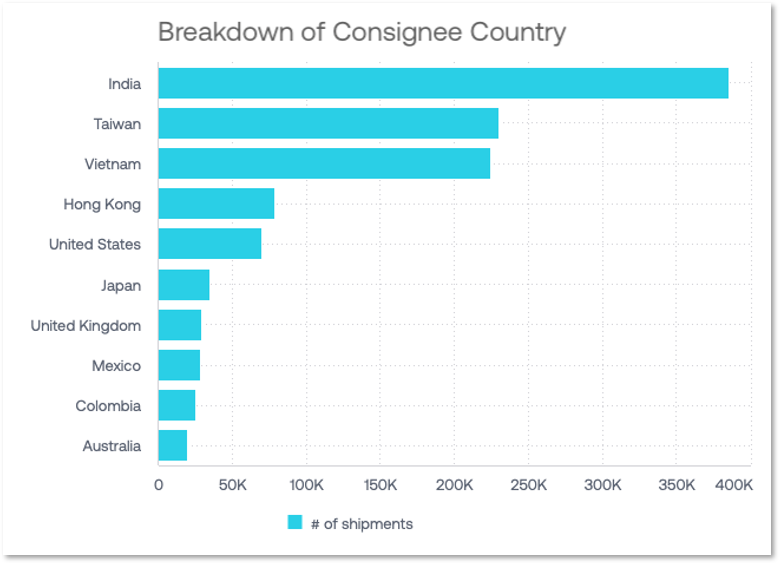
Exiger identified 13.1 million shipments involving the newly added UFLPA entities or their direct or indirect subsidiaries since the start of 2024:
# OF SHIPMENTS
# OF UNIQUE SHIPPERS
# OF UNIQUE CONSIGNEES
BUSINESS RELATIONSHIPS



Anticipated Disruptions
Stakeholders should prepare for:
- Delays: Increased CBP inspections of goods suspected of ties to listed entities.
- Shortages: Potential scarcity of products or raw materials originating from PRC-based suppliers.
- Strained Logistics Networks: Redirection of goods to alternative suppliers or regions.
- Cost Impacts: Increased expenses due to rerouted logistics and compliance measures.
Recommendations for Stakeholders
To mitigate risk, stakeholders should:
- Conduct Immediate Supply Chain Audits: Assess suppliers for potential ties to entities on the UFLPA list.
- Enhance Due Diligence Measures: Strengthen supplier vetting, contract terms, and documentation to comply with UFLPA standards.
- Engage Alternative Sources: Identify and secure new suppliers outside of high-risk regions or entities.
- Inform Key Partners: Communicate potential delays or changes to stakeholders and customers.
- Monitor Updates: Stay informed about ongoing regulatory developments and CBP enforcement trends.
Please contact your Exiger Client Success Manager for further information.
Perspectives