
Manufacturers selling in the U.S. should identify where suppliers test their products and qualify alternatives ahead of the proposed December 2028 transition.
On October 7, 2026, FCC Chairman Brendan Carr announced a forthcoming vote on rules that would restrict recognized device testing, certification and accreditation to the United States or economies that offer reciprocal recognition. The Commission is scheduled to vote on October 29. If adopted, the new geographic requirements would apply from December 1, 2028.
For manufacturers selling electronics in the U.S., the immediate priority is to identify which products depend on testing in potentially ineligible locations, including work arranged by suppliers. Qualifying alternative labs and changing testing arrangements can take time, particularly when those changes affect product development and launch schedules.
What the FCC Proposal Changes
FCC certification relies on recognized test labs to demonstrate that devices meet applicable technical requirements. The proposal would exclude labs in countries that do not offer reciprocal recognition, in addition to existing restrictions on ownership and control.
This follows the FCC’s 2025 rules restricting recognition of labs owned or controlled by foreign adversaries. In April 2026, the Commission adopted priority review for devices tested in trusted labs and launched the reciprocity rulemaking. The October proposal would extend the geographic restrictions across testing, certification and accreditation activities.
timeline
Key Milestones in the FCC’s Test Lab Rulemaking
Ownership restrictions adopted for test labs
Foreign-adversary ownership rules take effect
Reciprocity proposal; trusted-lab review adopted
Trusted-lab fast-track rules take effect
Proposal announced; vote set for Oct. 29
Proposed start date, subject to adoption
SOURCES: FCC RELEASES AND FEDERAL REGISTER. DECEMBER 1, 2028 IS THE PROPOSED START DATE, SUBJECT TO ADOPTION.
A facility owned by a Western testing company could still be located in a nonqualifying jurisdiction. Companies need to assess the site doing the work and its recognition status, together with the ownership behind it.
Which Products and Suppliers Need Review
Manufacturers should begin with products that require FCC certification, including many devices using Wi-Fi, Bluetooth, cellular connectivity or other radio transmitters. Potential exposure spans smartphones, laptops, networking equipment, smart home devices, vehicle telematics, connected medical devices and industrial sensors.
The review should include wireless modules and supplier-managed development programs. Original design manufacturers (ODMs), electronics manufacturing services providers and module vendors may select testing facilities on a brand’s behalf, leaving relevant records outside the brand’s own procurement systems.
Exposure depends on the product’s authorization route. The FCC’s April 2026 order did not adopt a requirement for products using Supplier’s Declaration of Conformity (SDoC) to be tested at accredited labs. Companies should check the adopted text before extending the new restrictions to every electronic product.
Where Supply Chain Pressure Could Emerge
The FCC reports that fewer than 4% of electronic devices are tested in U.S. labs. Exiger’s assessment is that relocating testing could create capacity and scheduling pressure before the proposed 2028 start date, especially where testing is closely integrated with manufacturing.
Test lab concentration
Lab Share Versus Testing Volume
- China and Hong Kong
- Upper-range estimate (82%)
- Rest of world
Share of FCC-recognized labs located in China and Hong Kong
China and Hong Kong: 21%. Rest of world: 79%.
Share of devices tested in China-based labs (75–82% by source)
China-based labs: at least 75%, with estimates up to 82% depending on source. Rest of world: roughly 18–25%.
(Source: Exiger). Lab share: 126 of 591 FCC-recognized labs in China and Hong Kong. Testing estimates for China-based labs range from 75% to 82% by source and method.
Potential constraint | Business consequence |
Limited eligible capacity | Demand moving to eligible jurisdictions could increase queues for specialist testing. Lab recognition counts alone do not establish whether facilities can handle the required tests and production volumes. |
Longer retest cycles | Testing further from the factory can add sample shipping, customs clearance and engineering travel. Failed tests may take longer to diagnose and repeat, putting launch dates at risk. |
Supplier-selected labs | Testing arranged by ODMs and contract manufacturers can leave brands unaware of dependencies on facilities that may lose eligibility. Brands need the underlying lab records to assess exposure. |
New concentration risk | Routing replacement work through one lab or jurisdiction can create another bottleneck. Alternatives should be assessed for technical capability, available capacity and geographic concentration. |
(Source: Exiger) Figure 3. FCC-recognized labs in selected jurisdictions. Source: compilation of 591 FCC-recognized labs. Counts reflect facilities rather than testing capacity and do not establish eligibility under the final rules.
Moving manufacturing out of China does not, by itself, resolve the testing question. A supplier in another country may continue sending samples to a lab in China. Companies should trace where testing actually occurs and confirm eligibility under the final rules.
The adopted order’s transition provisions will also be essential for assessing existing equipment grants, product modifications and any retesting obligations. Companies should review those provisions before deciding how to handle previously certified products.
What Companies Should Do Now
- Map testing and certification dependencies. For each relevant product and wireless module, identify the test lab, facility location, certification body and supplier responsible for arranging the work. Obtain supporting reports and authorization records, including those held by ODMs and contract manufacturers.
- Assess location and ownership together. Check current FCC recognition, facility jurisdiction, ownership and control. Assess exposure under the proposed reciprocity framework, then confirm qualifying economies and transition conditions against the adopted order.
- Qualify alternatives and confirm capacity. Evaluate U.S. labs and labs in potentially qualifying jurisdictions for the specific tests your products require. Ask about booking lead times, retesting support and capacity. Avoid placing all replacement work with one facility or in one location.
- Build the transition into product schedules and budgets. Model sample logistics, engineering support, testing fees and retest cycles against planned launches. Prioritize products with the greatest revenue exposure, complex testing needs or limited alternatives.
- Require supplier transition plans. Ask ODMs, manufacturing partners and module vendors to identify affected labs, proposed replacements, costs and timing. Assign responsibility for collecting evidence and updating the plan as the FCC publishes the adopted requirements.
How Exiger Can Help
Exiger helps organizations map supplier relationships and assess third-party ownership and control risk. 1EXIGER.AI connects those relationships to products and programs so teams can identify exposure and coordinate action. For the FCC transition, teams can use that view to identify products that depend on potentially ineligible labs and prioritize follow-up with suppliers.
The FCC High-Risk Laboratory List is a list of laboratories and other high-risk companies and entities targeted by FCC supply chain prohibitions. The list is available to 1EXIGER.AI customers. Use it to review the labs that certify your direct or sub-tier electronic products and parts in order to maintain market access in the United States.
Contact Exiger or speak with your Exiger representative to review your testing and certification footprint and supplier transition priorities.
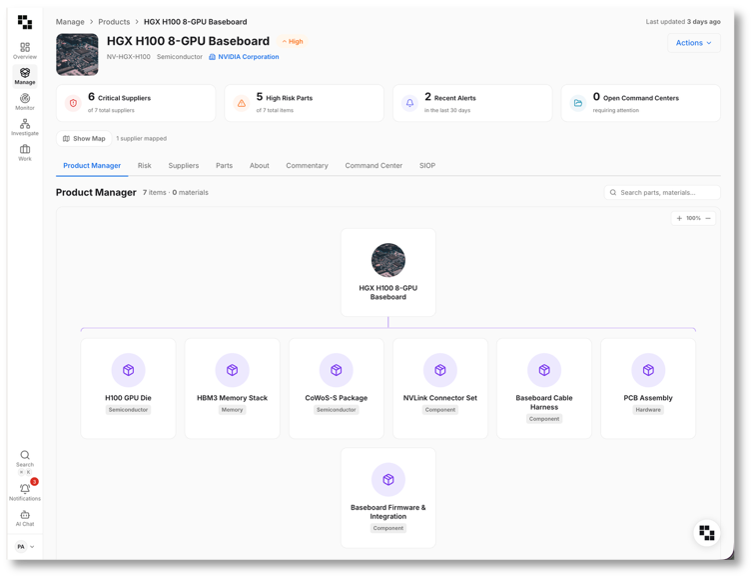
Dependency Mapping
Connect products to the parts and supplier relationships behind them. Identify affected sub-tier electronic products.
(Source: Exiger) REVEAL POTENTIAL RISKS TO US MARKET ACCESS DEEP IN SUB-TIER PRODUCTS AND COMPONENTS.
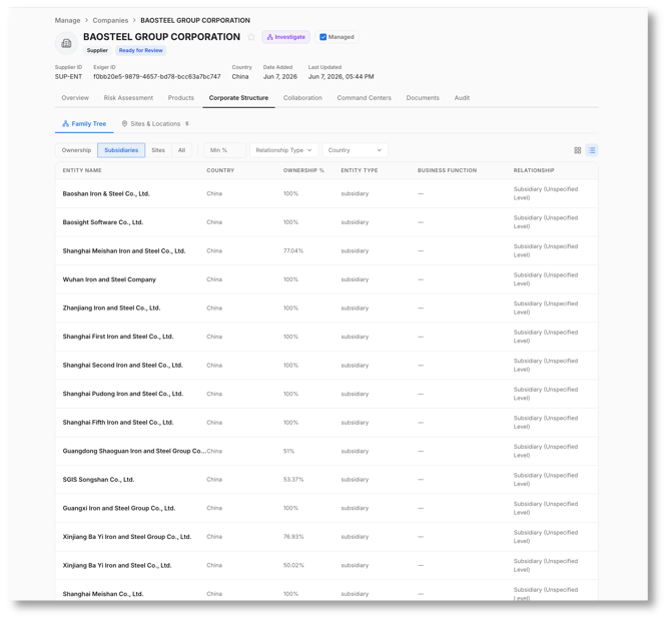
Location and Ownership Analysis
View corporate relationships, ownership stakes and jurisdictions to identify affected labs.
(Source: Exiger) IDENTIFY LAB RELATIONSHIPS AND OWNERSHIP STRUCTURES THAT CARRY EXPOSURE
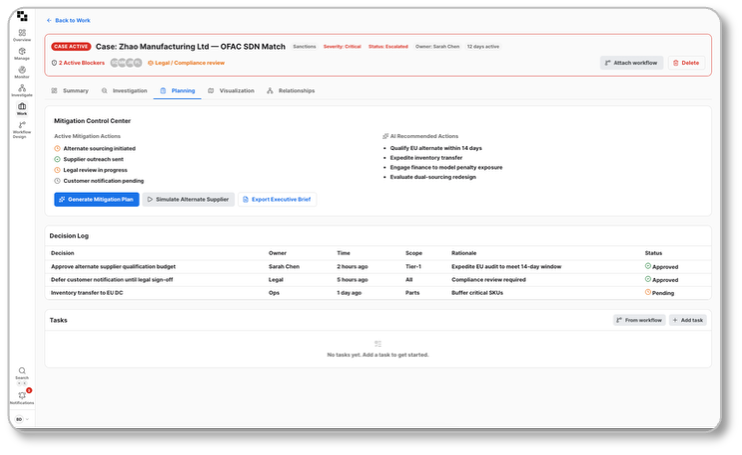
Unified Risk Governance and Response Workflows
Create a shared “war room” view with ownership, escalation, and tracked mitigation actions across procurement, logistics, compliance, and leadership.
(Source: Exiger) CUSTOM WORKFLOWS AND AGENTIC AI CONNECT CROSS FUNCTIONAL TEAMS AND EXECUTE REMEDIATIONS TO PREVENT DISRUPTION.
Get an Exposure Assessment
Organizations exposed to risk from the new FCC rules should initiate an immediate supply chain exposure assessment with Exiger.
Contact us or reach out to your Customer Success Manager to get started.
Table of Contents
Get in Touch
Learn how you can build a more resilient supply chain.


