
Sulphuric acid, with annual global production exceeding 260 million metric tonnes, is a foundational industrial input: roughly 60% feeds fertilizer production, with the remainder essential for copper and nickel extraction, uranium leaching, semiconductor manufacturing, and oil refining. The ban covers sulphuric acid produced as a by-product of copper and zinc smelting in China, the world’s largest exporter.
The ban compounds an already acute sulphur shortage driven by the closure of the Strait of Hormuz, which has blocked Middle Eastern sulphur shipments since the Iran conflict began in late February. The Middle East accounts for roughly one-third of global sulphur production and approximately 50% of seaborne trade. Notably, sulphur supply was already under strain before the conflict began, with prices nearly tripling in the prior twelve months. The conflict did not create a fragile market, it further exposed one that was already stretched.
Broader Context
|
Indicator |
Status |
|
China’s 2025 acid exports |
4.65 million tonnes (+73% YoY) |
|
January to April 2026 quota |
700,000 tonnes (down from 1.3 million in same period 2025) |
|
May 2026 onward |
De facto ban; may extend through 2026 |
|
Sulphur prices (pre-conflict) |
Nearly tripled over prior twelve months; market already in structural deficit |
|
Sulphur prices (post-conflict) |
Up ~70% since Hormuz closure, compounding elevated baseline |
|
Chile acid price impact |
|
|
Middle East sulphur |
~33% of production; ~50% of seaborne trade; blocked by Hormuz |
|
Phosphate fertilizer exports |
Suspended through August 2026; 50 to 75% of volumes restricted |
|
Replacement timeline |
New plant construction takes 18 to 24 months before permitting and ramp-up; no near-term substitution at scale |
Dual Supply Shocks Trigger Systemic Risk Across Global Industrial Supply Chains
China’s sulphuric acid export ban and the Hormuz disruption are constraining a foundational input, cascading across metals, fertilizers, energy, and advanced manufacturing.
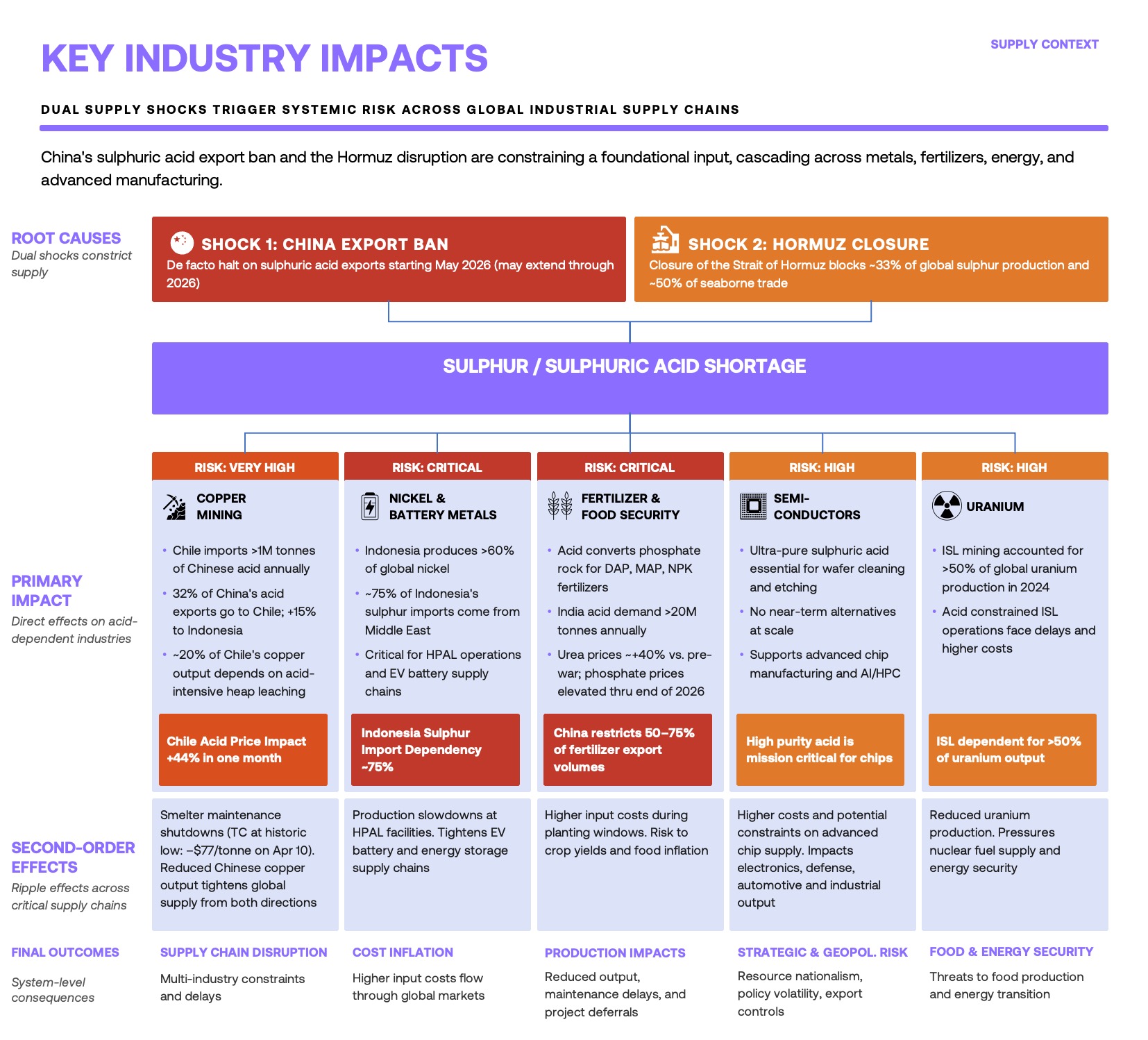
IMMEDIATE IMPLICATION: Organizations face simultaneous input pressure, cost inflation, and supply chain delays across critical materials, with limited ability to substitute or rapidly scale alternative supply.
NO NEAR-TERM SUBSTITUTION
New acid capacity takes 18–24 months before permitting and ramp-up; no near-term substitution at scale.
Key Takeaways
- Structural supply shock: Simultaneous disruption to Chinese acid exports and Middle Eastern sulphur flows is tightening global supply with no near-term substitution (18–24 month capacity lag).
- Cross-sector impact: Acid-dependent industries—including copper, nickel, fertilizers, semiconductors, and uranium—face immediate disruption with cascading second-order effects.
- Compounding cost pressure: Input shortages are driving rapid price escalation across metals and fertilizers, with downstream impacts on food, energy, and industrial production.
- Concentrated exposure: Key regions and industries are highly dependent on constrained supply sources, amplifying disruption risk.
Key Industry Impacts
Copper: direct and second-order effects. Chile imports over one million tonnes of Chinese acid annually (32% of China’s total acid exports, with a further 15% flowing to Indonesia); roughly 20% of Chile’s copper output depends on acid-intensive heap leaching. Prices have already surged 44% in one month. But the disruption extends beyond acid-importing miners. Inside China, the export ban is expected to depress domestic acid prices, eliminating the byproduct revenue that Chinese smelters had relied on to offset collapsing processing fees. Spot treatment charges for imported copper concentrate hit a historic low of minus $77 per tonne on April 10. Analysts expect smelters to bring forward planned maintenance shutdowns, reducing Chinese copper output and tightening global supply from both directions simultaneously.
Nickel and battery metals. Indonesia accounts for over 60% of global nickel production and imports approximately 75% of its sulphur from the Middle East. With limited domestic acid capacity and no near-term alternative sourcing, Indonesian high-pressure acid leach (HPAL) operations are among the most exposed in this event. Constraints here flow directly into electric vehicle battery and energy storage supply chains.
Fertilizer and food security. Sulphuric acid converts phosphate rock into phosphoric acid, the essential ingredient in DAP, MAP, and NPK (nitrogen, phosphorus, potassium) fertilizers. China has restricted both the acid and the finished fertilizers, compounding the squeeze on the entire phosphate value chain. Major importers including India, Southeast Asia, and parts of Africa face higher input costs during critical planting windows. India’s sulphuric acid demand alone exceeds 20 million tonnes annually. International urea prices have risen approximately 40% compared to pre-war levels, and phosphate prices are expected to remain elevated through at least the end of 2026.
Silver. According to the Silver Institute, roughly 72% of global silver is a by-product of base metal mining, with copper alone accounting for about 27%. The silver market has been in structural deficit for five consecutive years, with cumulative shortfalls exceeding 800 million ounces since 2021. Any reduction in copper output from acid-constrained operations directly tightens silver supply into a market that is already drawing down inventories.
Uranium. In-situ leach (ISL) mining accounted for over 50% of global uranium production in 2024, and the process depends on sulphuric acid. Kazakhstan, the world’s largest uranium producer at 39% of global supply, consumed 1.85 million tonnes of acid in 2025. Kazatomprom, the state-owned producer, had already warned of production limitations due to acid shortages before the current crisis and has been constructing a dedicated 800,000-tonne acid plant to reduce import dependency.
Semiconductors. Sulphuric acid is essential for wafer cleaning, etching, and oxide removal in chip fabrication. Around 40% of global sulphur exports originate from the Middle East, and the concern for fabs is logistics disruptions and price volatility for the ultra-high-purity grades required in advanced manufacturing. As global fab construction accelerates under initiatives like the U.S. CHIPS Act, acid supply constraints create a direct input bottleneck competing with mining and fertilizer demand.
Regional Exposure
Most exposed: Indonesia (HPAL nickel operations dependent on Middle Eastern sulphur for approximately 75% of imports, with no domestic alternative) and Chile (which received 32% of China’s acid exports in 2025), the Democratic Republic of Congo (DRC), and Zambia (acid-dependent copper operations with high reliance on Chinese imports).
High food security risk: India and parts of Africa, where fertilizer cost escalation flows directly into crop yields and food prices.
More resilient: Mexico, with vertically integrated mining and domestic smelter acid; and Australia, which sources most sulphur from Canada rather than the Gulf corridor.
Exiger Insights
Exiger used its 10 billion supply chain records to develop a dashboard illuminating sulphuric acid trade flows, export volumes, and consignee industry concentration across the affected corridor. Analysis of Chinese sulphuric acid export volumes reveals the supply cliff since the quota took place earlier this year. Note that trade record reporting lags may contribute to the steepness of the most recent decline, with the full impact of the quota and ban expected to become clearer as data normalizes over the coming weeks.
(Source: Exiger) VOLUME OF SULPHURIC ACID SHIPMENTS FROM CHINA SINCE 2025
Industry mapping of Chinese sulphuric acid shippers to consignee industries confirms the cross-sector exposure. Metals and Mining is the dominant receiving industry by volume, followed by Chemicals and Food Products (reflecting fertilizer demand). Electrical Equipment, Construction Materials, Oil and Gas, Distributors, and Automobiles round out the top consignee industries, illustrating how acid supply constraints cascade from primary extraction through manufacturing and infrastructure.
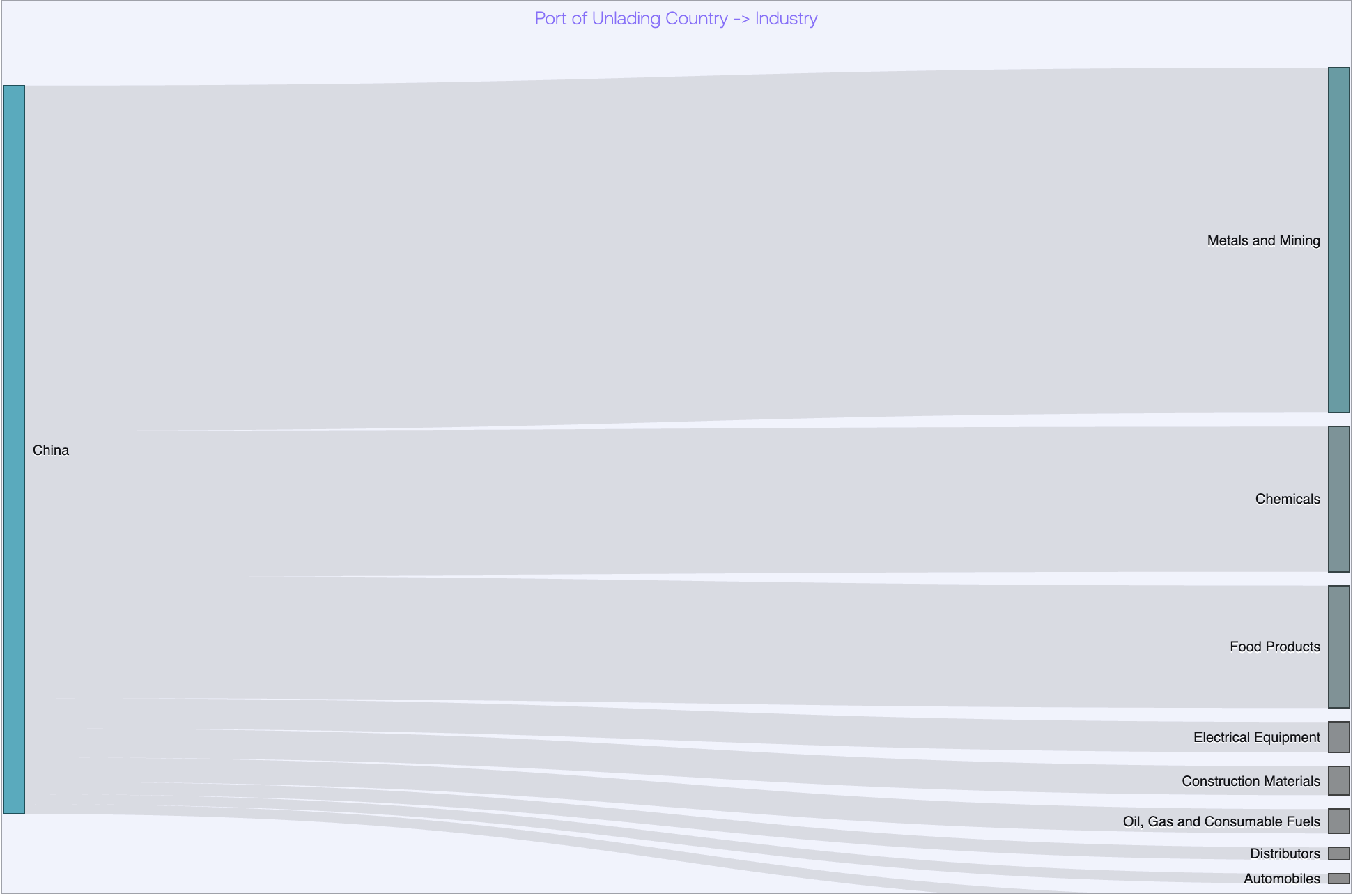
(Source: Exiger) TOP CONSINGEE INDUSTRIES OF CHINESE SULPHIRIC ACID SHIPMENTS SINCE 2025
What Organizations Should Do Now
1. Map sulphuric acid and sulphur exposure. Identify direct and indirect consumption across your supply chain, including embedded exposure through copper, nickel, uranium, phosphate fertilizers, silver, and semiconductor-grade chemicals. Trace feedstock provenance to assess concentration on Chinese acid exports and Middle Eastern sulphur flows.
2. Secure alternative supply. Engage alternative smelter-acid producers including Pan Pacific Copper and Sumitomo Metal Mining (Japan), Aurubis and Boliden (Europe), Chemtrade Logistics and Teck Resources (Canada), and PVS Chemicals (US). For fertilizer inputs, assess availability from OCP Group (Morocco), Mosaic (US), and Nutrien (Canada). Vet prospective suppliers through Exiger’s continuous regulatory, sanctions, and compliance monitoring to identify operational and safety risks before onboarding. Evaluate on-site acid production or closed-loop recycling for high-consumption operations.
3. Monitor policy developments and build buffer stocks. Leverage Exiger’s supply chain disruption event intelligence to catch signals from China’s NDRC and Ministry of Commerce on ban duration and scope. Watch for formal enforcement, extension beyond 2026, or expansion to additional chemical products. Monitor Hormuz reopening developments and Gulf sulphur production normalization. Prioritize buffer stock accumulation for acid-dependent operations ahead of peak consumption periods.
4. Assess contract and allocation risk. Review supply agreements with chemical suppliers, mining operators, and fertilizer producers for force majeure provisions, allocation triggers, and price adjustment clauses. Organizations on spot or short-term contracts face the highest near-term exposure. Exiger’s supply chain disruption event intelligence capability will monitor whether China issues a formal prohibition or extends current administrative controls, while Exiger’s third-party risk management capabilities can watch for downstream force majeure declarations from acid-dependent producers.
5. Stress-test continuity scenarios. Model 30-, 60-, and 90-day disruptions against production schedules, procurement costs, and delivery commitments. Factor in both the China ban (potentially through end of 2026) and the Hormuz closure (duration dependent on conflict resolution).
How Exiger Can Help
The 1Exiger platform helps you understand, respond to, and prevent disruptions.
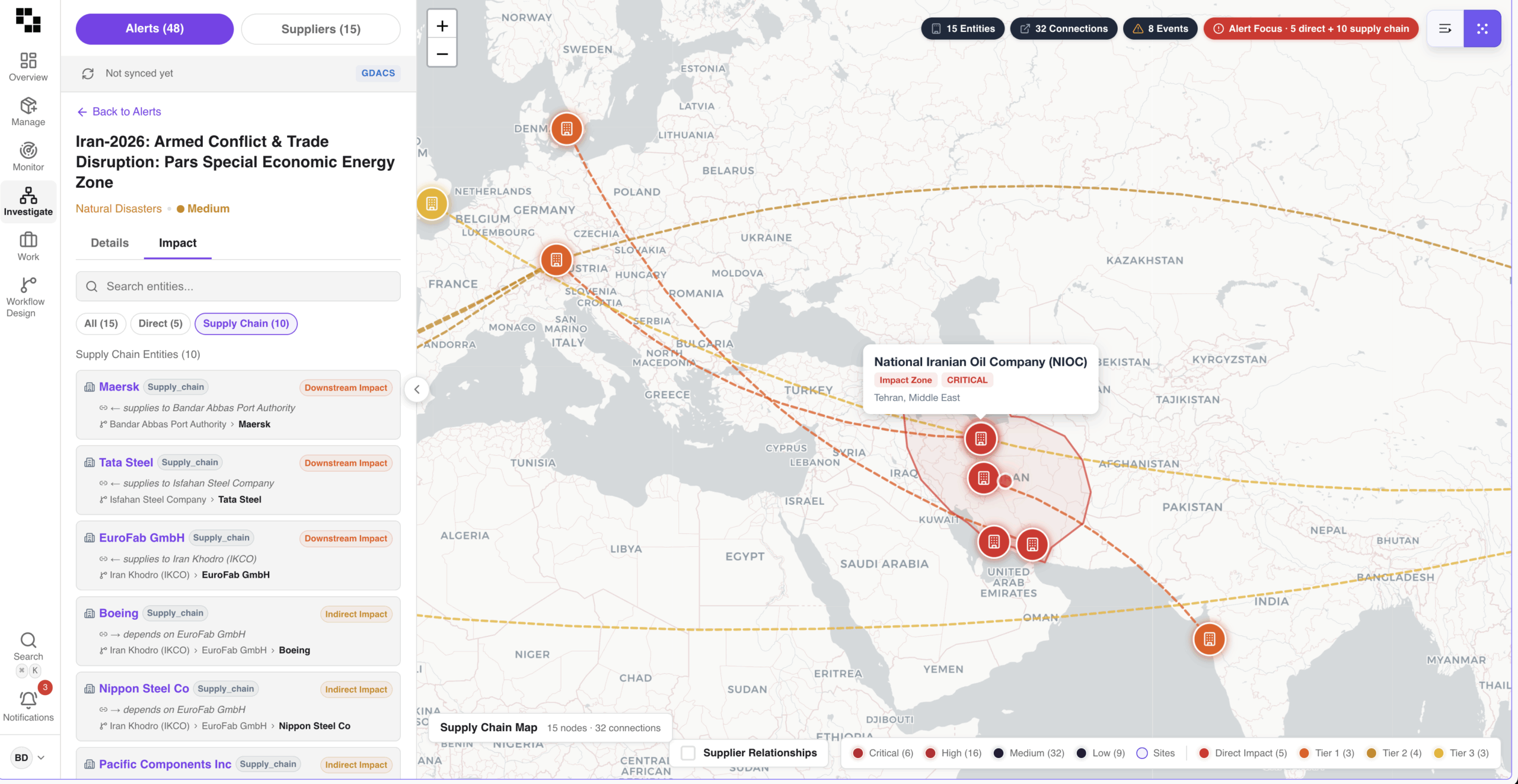
Supply Chain Exposure Mapping
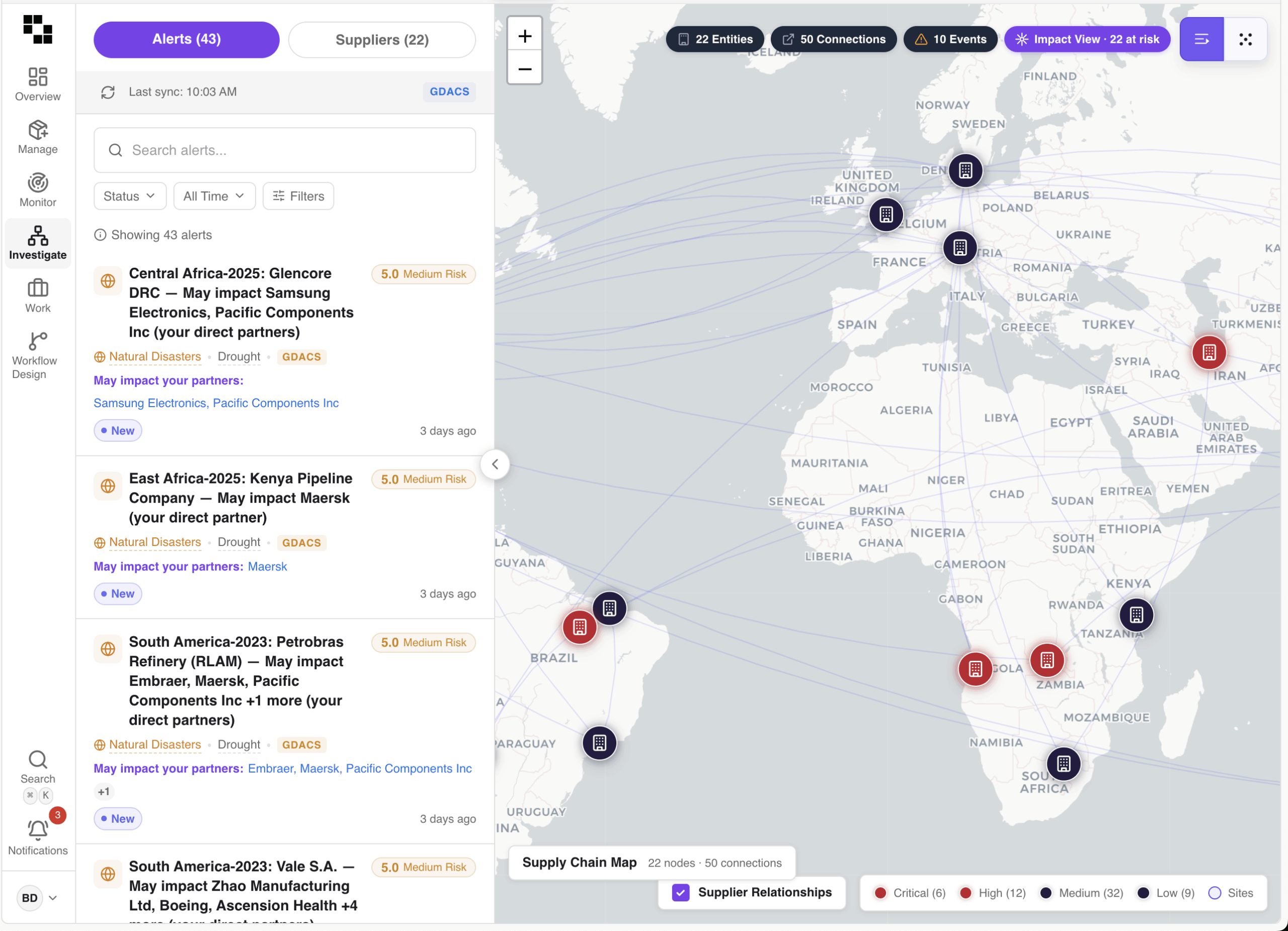
Uses our AI and ontology to connect relationships across suppliers, sites, materials, and upstream dependencies; helping teams understand if and how their networks are exposed.
Screenshot: a detailed view of your global network and how disruption events may impact trade flow. (Source: Exiger)
Dependency and Concentration Analysis
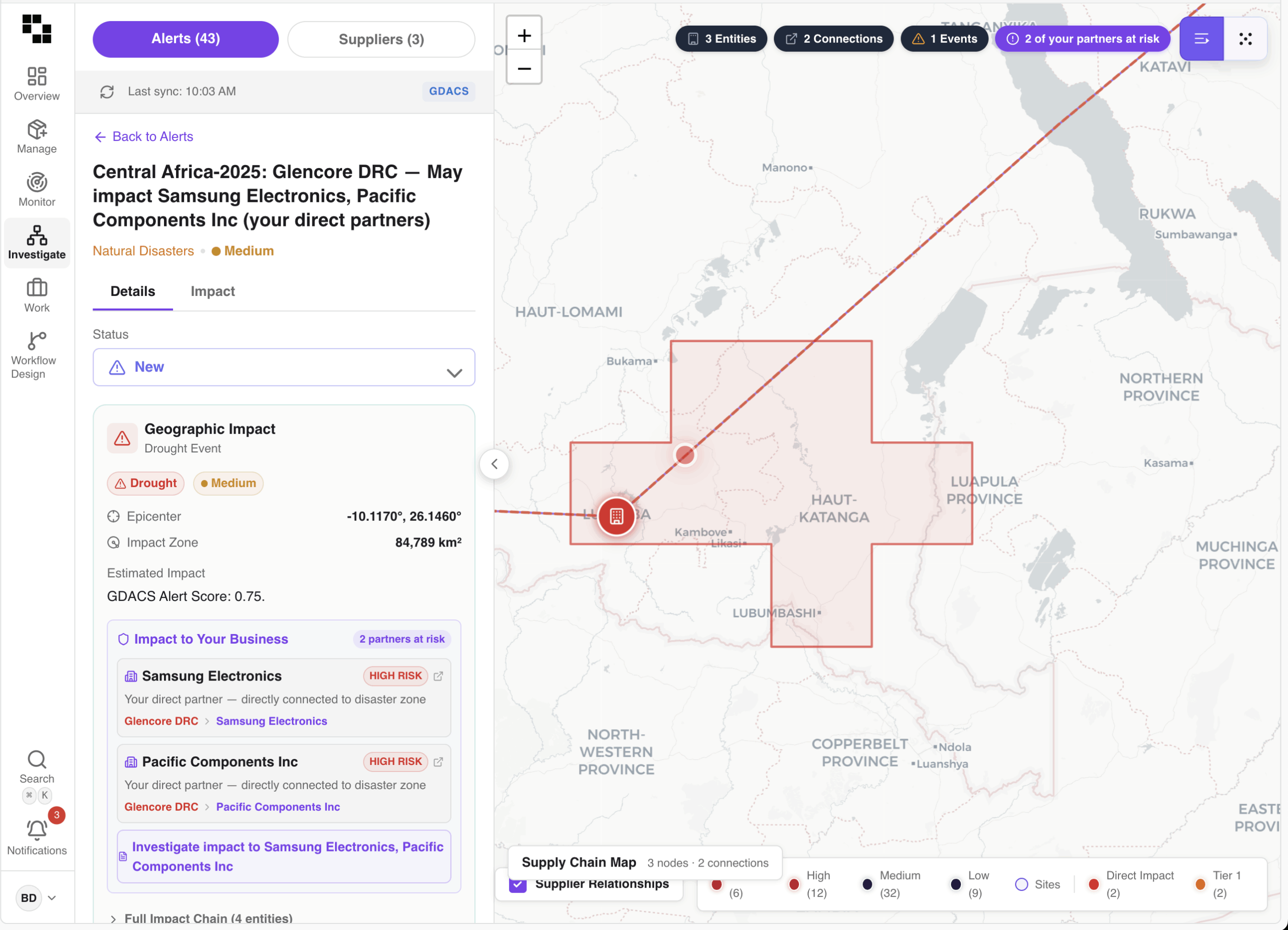
Identifies where direct and indirect reliance on sulphuric acid impact your value chains.
Screenshot: 1Exiger identifies critical chokepoints, even in the sub-tiers, that may be impacted by disruption events. (Source: Exiger)
Alternative Sourcing Analysis
Identifies and onboards substitute sources considering manufacturing capability, geographic fit, and more.
Screenshot: see projected downstream impact from disruption events at every tier. (Source: Exiger)
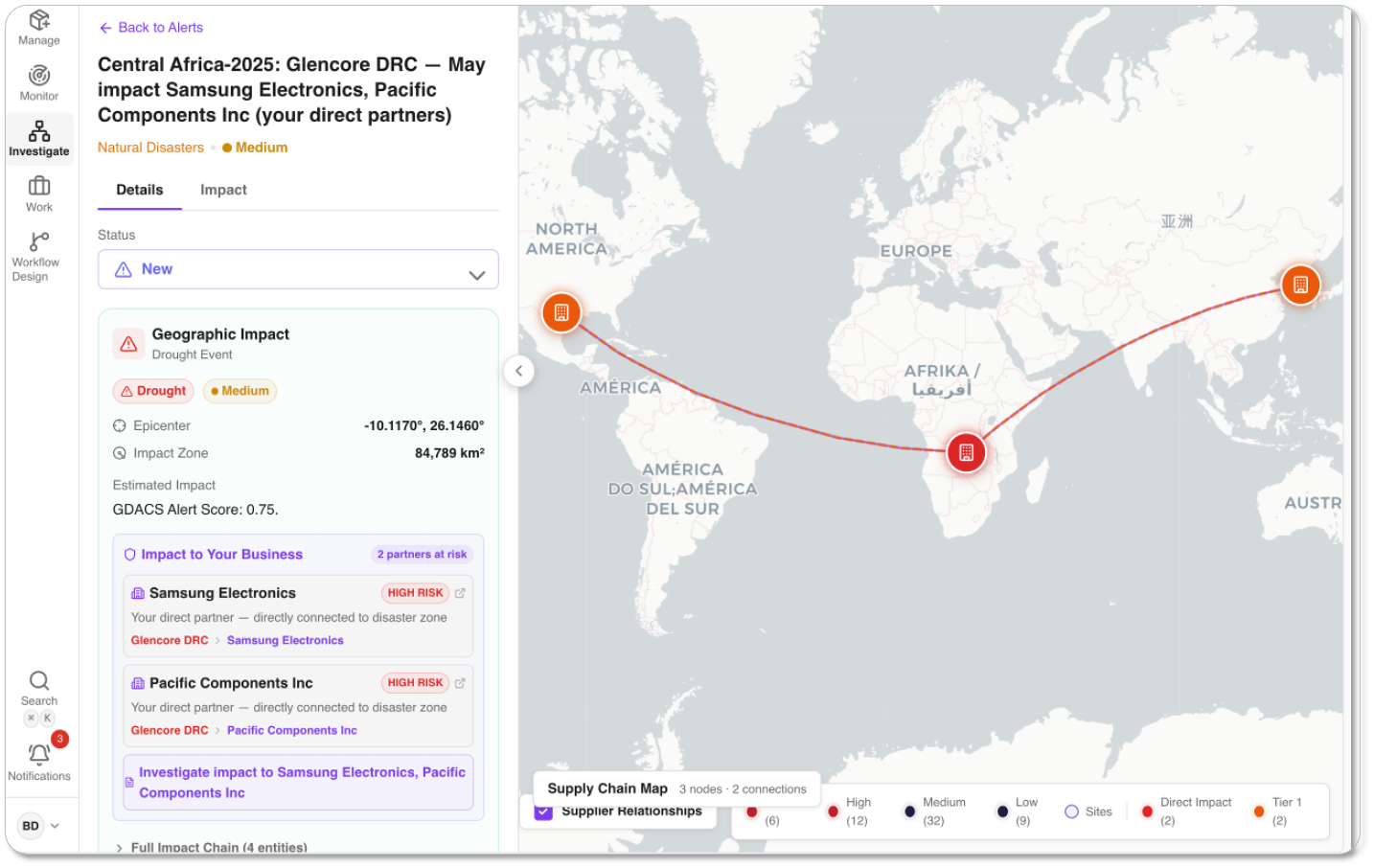
Scenario Modeling and Sensitivity Testing
Models disruption scenarios to quantify downstream impact, stress-test resilience, and compare mitigation strategies across suppliers, parts, and materials.
Screenshot: model impact for various conditions and receive recommended courses of action
(Source: Exiger)
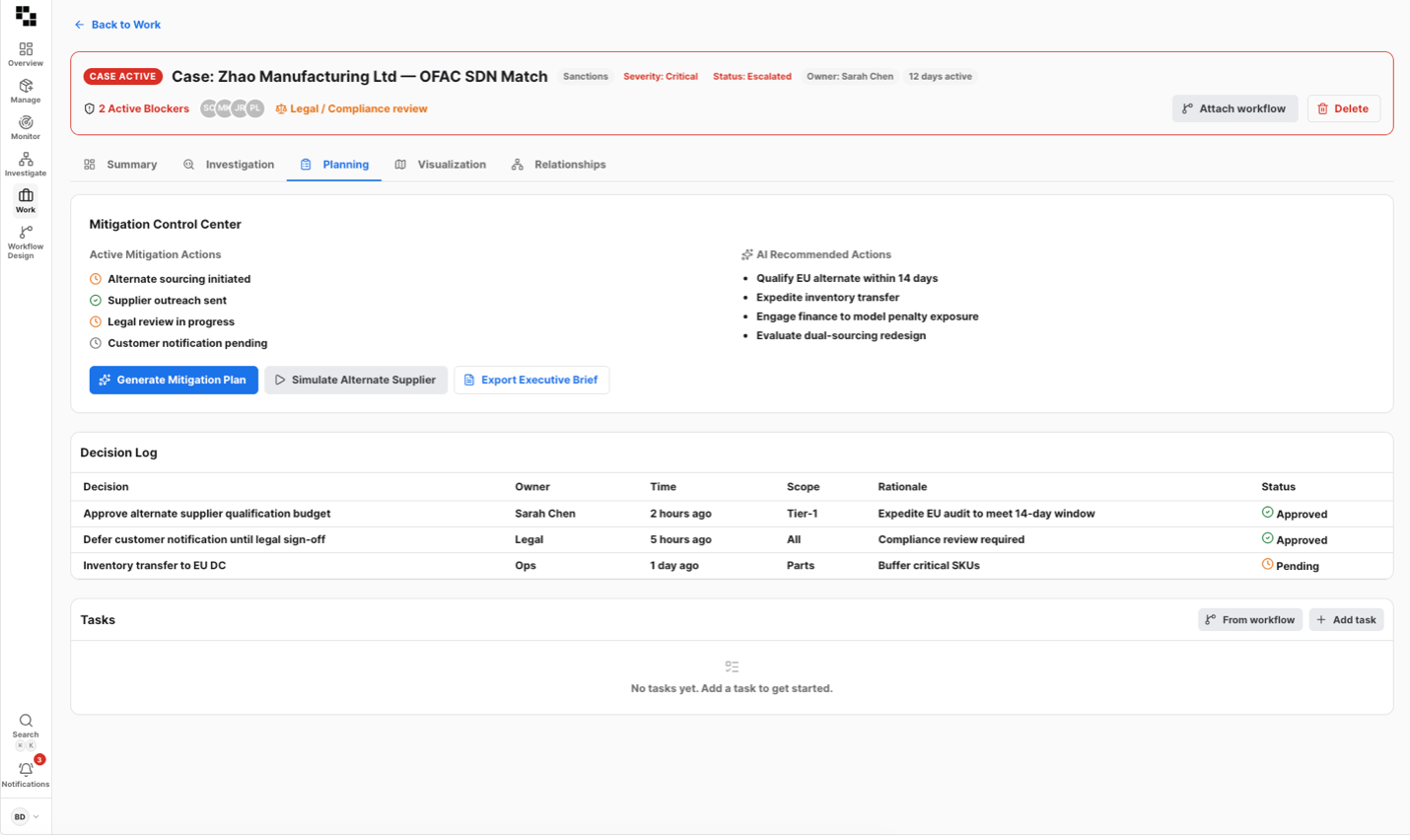
Unified Risk Governance and Response Workflows
Brings monitoring, escalation, ownership, and mitigation together into one coordinated response.
Screenshot: custom workflows and agentic AI connect cross functional teams and execute remediations to prevent disruption. (Source: Exiger)
Get in Touch
Get an Exposure Assessment
Organizations concerned they may be exposed to sub-tier sulphuric acid dependence should initiate an immediate exposure assessment with Exiger.
Contact us or reach out to your Customer Success Manager to get started.
Table of Contents
Get in Touch
Learn how you can build a more resilient supply chain.


