
Third-Party and Supply Chain Risk Types
From geopolitical risk and cybersecurity threats to forced labor and climate change, the risk factors that can threaten an organization’s supply chain are increasing in frequency and severity by the day. To mitigate long-term supply chain risks proactively, it is critical for organizations to establish a holistic view of the overall risk factors that could adversely impact their operations, revenue, and brand reputation.
Exiger is the only supply chain and risk management solution that provides visibility across all risk categories.
From geopolitical risk and cybersecurity threats to forced labor and climate change, the risk factors that can threaten an organization’s supply chain are increasing in frequency and severity by the day. To mitigate long-term supply chain risks, it is critical for organizations to establish a holistic view of the overall risk factors that could adversely impact their operations, revenue, and brand reputation.
Exiger is the only supply chain and risk management solution that provides visibility across all risk categories.
Navigating the Seven Dimensions of Risk
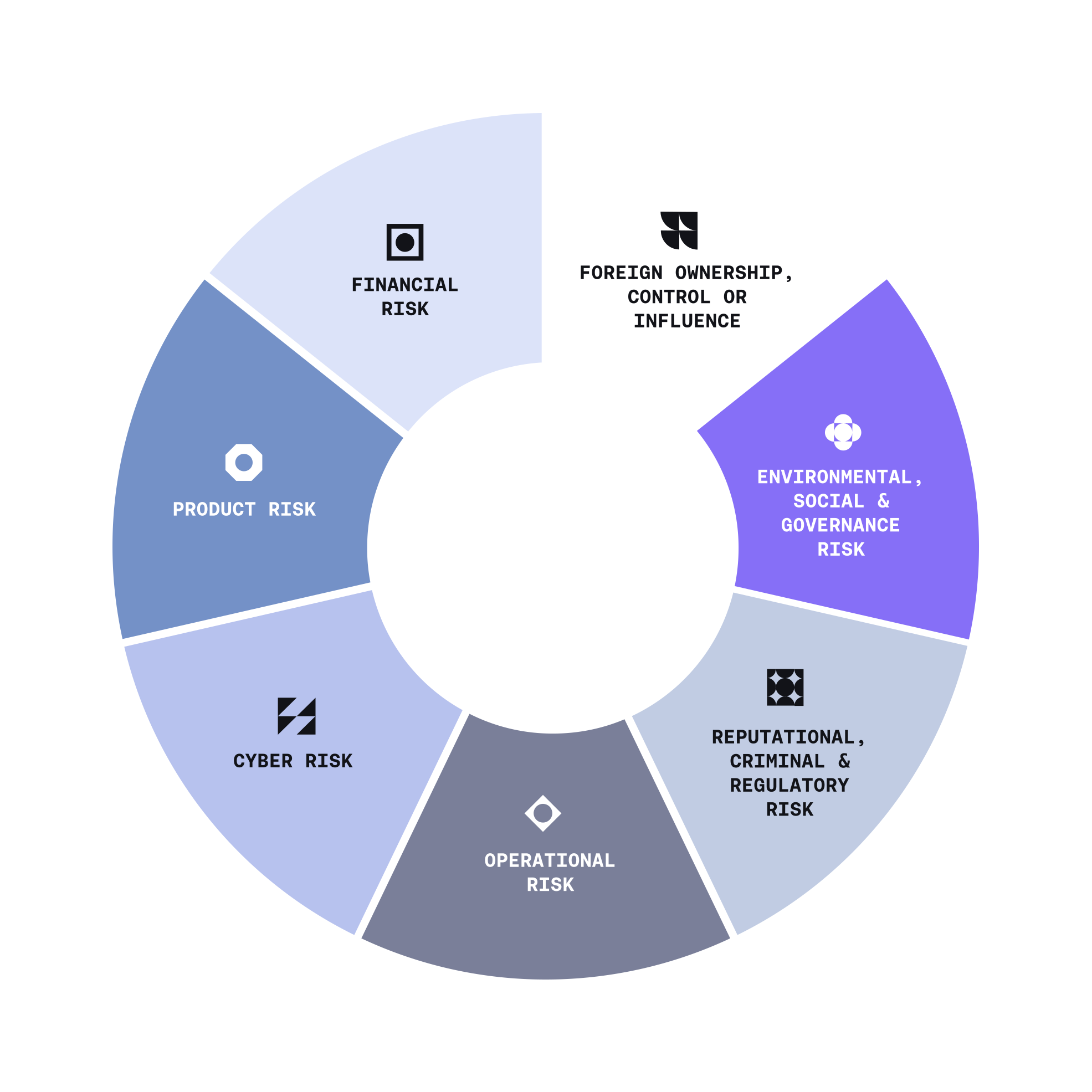
A single supplier decision requires a complex and endless waterfall of risk-weighted decisions to optimize a supply chain. Multiply this by thousands of suppliers in a serial production scenario, and decision complexity explodes in terms of variables. Exiger’s risk model helps simplify some of that calculus, capturing the multitude of supply chain risks into seven major categories.
Focusing on only one or two types of risk at the expense of others can also hurt your organization in the long run, as your risk coverage will have limited visibility and effectiveness. Risks don’t respect boundaries. A holistic view and constant monitoring are required.
Exiger’s seven dimensions of risk provide a framework to help our customers identify, mitigate and combat the many third-party and supply chain risks that threaten tiered supply chain ecosystems today.
Financial Risk
Foreign Ownership, Control or Influence (FOCI)
Environmental, Social & Governance (ESG) Risk
Reputational, Criminal & Regulatory (RCR) Risk
Operational Risk
Cyber Risk
Product Risk
Financial risk is a top risk factor for companies in the global marketplace. Not only is financial duress a key leading indicator for governance, cyber and operational risks, but the financial collapse of a critical vendor can shatter supply chains. Insolvency, bankruptcy or financial hardships that cripple crucial nodes in the network of modern business dependencies can create cascading failures throughout a system, as the world witnessed during the COVID-19 pandemic. In fact, 42% of global risk managers rate business interruption from financial failure as the most prevalent risk in their supply chains. This concern is not misplaced: according to the U.S. Small Business Association, 50% of small businesses fail within the first five years, and corporate credit risk has increased steadily since 2017. Learn more about the financial risk factors that impact your supply chain and what you can do to mitigate them.


Foreign ownership, control, or ownership (FOCI) risk, also called jurisdictional risk, is the analysis of geopolitical tensions, national security requirements, export control regulations and critical asset protection that impact a supplier, product, customer or supply chain. Analysis of FOCI encompasses assessing the extent to which foreign interests can control or influence a company, its supply chains, and its third parties. This scrutiny is crucial to safeguarding sensitive technologies, intellectual property, and infrastructure, as it helps identify potential risks, vulnerabilities, and conflicts of interest that could compromise national security or economic interests. Here’s a comprehensive view of all the factors that make up FOCI risk.
Environmental, social and governance (ESG) expectations are rising across investors, consumers, regulators, and financial reporting bodies. However, most programs lack ongoing ESG risk monitoring and visibility into their upstream suppliers — who pose significant risks. Survey and self-reporting information-gathering approaches are slow, quickly outdated, and provide a biased and incomplete view upon which many key risk decisions are based. Risk exposure multiplies at each tier within your supply chain ecosystem through the unknown reliance on sub-tier suppliers who might be involved in forced labor, experience data breaches or engage in poor environmental practices. Learn more about ESG risk indicators and how you can proactively minimize these risks.
This supply chain risk dimension covers reputational, criminal, and regulatory (RCR) risks across the supplier ecosystem. Maintaining regulatory compliance across fragmented jurisdictions and through a wave of new compliance legislation, regulations and policies that govern how companies manage suppliers, supply chains and customers, has become incredibly challenging. Regulatory compliance failures can lead to fines, penalties or criminal prosecution and can be damaging to a company’s brand. Whether or not these risks stem from your own operations or those of your supply chain, the impact to your reputation, brand and bottom line will ultimately be the same. Find out more about RCR risks so that you can identify, assess and mitigate them ahead of time.
Operational risk spans a wide variety of different categories, including geopolitical and geoeconomic risk, the climate variability impact on the physical location of an organization, counterfeits, and potential alternative suppliers. To prevent disruptions to you or your customers, it’s necessary to understand the operational health of all existing (and potential) suppliers and intermediaries in your supply chain. The scope of understanding should include company leadership, financial stability, compliance with regulations, hardware and software integrity, geographic concerns, and labor issues, among other factors. Continuous monitoring of operational risk indicators from the following categories is key to reducing potential losses resulting from inadequate or failed internal processes or unexpected external events:
- Hardware Counterfeit & Compromise Reporting
- Labor Issue Reporting
- On-Time Delivery
- Quality Metrics
- Mass Layoffs
- Corporate Restructuring
- Leadership Changes
- Liquidity Problems, Bankruptcy
- Noncompliance with Laws, Regulations
- Energy Scarcity
- Health & Safety Issues
- Facility Issues
- Product Quality
- IT & Business Process Certifications (like ISO Certifications)
- Financial Stability
- Data Breaches
- Software Integrity
- Alternative Suppliers
- Predictive Obsolescence
- Certification & Awards
- M&A Activity
- Sanctions
- Exiger Cyber Hygiene Assessment uses over 200 technical indicators—from patching cadence to DNS health to objectively monitor the cybersecurity hygiene of organizations (including their vendors) and gauge whether their security posture is improving or deteriorating over time.
- Exiger Breach Intelligence, By incorporating both recent and historical cyber incidents, this model provides a comprehensive assessment of an entity’s cyber risk exposure and likelihood of future breaches.
- Exiger Cyber Resilience Evaluation goes deeper into organizational and human factors—industry risk, security leadership, and certifications—to assess how prepared an entity is to withstand and respond to a cyber incident.
Product risk occurs when there’s a lack of transparency in your supply chain due to siloed data, incompatible systems across an enterprise, or the outsourcing of parts and raw materials. This results in the inability to monitor, influence and control n-tier supplier relationships as well as the components and material-inputs that go into your products — things like metals, electronics, plastics, chemicals and inactive or active ingredients. This can lead to a wide range of supply chain issues, including but not limited to: product recalls, late deliveries, lengthy lead-times, cost-overruns, unexpected supply disruptions and compliance violations. The first step to mitigating long-term product risk is to map both the entities involved in the manufacture, assembly and distribution of them, as well the item-level bills of material they are made of. Using a variety of highly specialized methods to map product attributes and a plethora of public and private data sources, you’ll be able to uncover hidden tiers of supply, n-tier supplier dependencies, countries of origin, and lead-times at each node of an extended enterprise — empowering your efforts to lower product cost, improve service levels, comply with regulations, and mitigate risk. To mitigate product risk effectively, consider a solution that can help you forecast, monitor, track, and trace the following:
- Material Input to End-Product
- Material, Processing, and Quality Specifications
- Lead-Times at Each Supply Chain Node
- Rare Earth Mineral Content
- N-Tier Dependencies
- Counterfeit Risk
- Part Compliance (REACH, ROHS, Lead-Free, etc.)
- On-Time Delivery/Recall History
- Quality Metrics
- Sole-Source vs Multi-Source
- Elemental Exposure
Safeguard Your Supply Chain
in Real-Time
Our proprietary risk model, part of the 1Exiger platform, powers full visibility across your entire ecosystem. It delivers an overarching dynamic view to inform supply chain risk management. The customizable risk weighting can be mapped to your thresholds, surfacing only the most relevant findings — that are fully auditable and verifiable — and eliminating false positives.
The comprehensive risk scores with 1Exiger can alert you to potential disruption events to avoid or mitigate. This helps save costs by avoiding regulatory fines — and save time spent by your team on activities related to risk management.
Safeguard Your Supply Chain
in Real-Time

Our proprietary risk model, part of the 1Exiger platform, powers full visibility across your entire ecosystem. It delivers an overarching dynamic view to inform supply chain risk management. The customizable risk weighting can be mapped to your thresholds, surfacing only the most relevant findings and eliminating false positives.
Make Proactive Decisions with Absolute Confidence
Exiger’s end-to-end third-party and supply chain due diligence solution provides stakeholders with a 360° view of the risks threatening your operations, brand and reputation through:
- Automated knowledge graph creation from structured and unstructured open-source data
- Comprehensive risk profiles, including dashboards and analytics
- Continuous monitoring of relationships for changes
All risks are weighted based on importance and calculated into an overall risk score, providing an overall portfolio view that makes management of risk and impacts easier to manage.
Make Proactive Decisions with Absolute Confidence
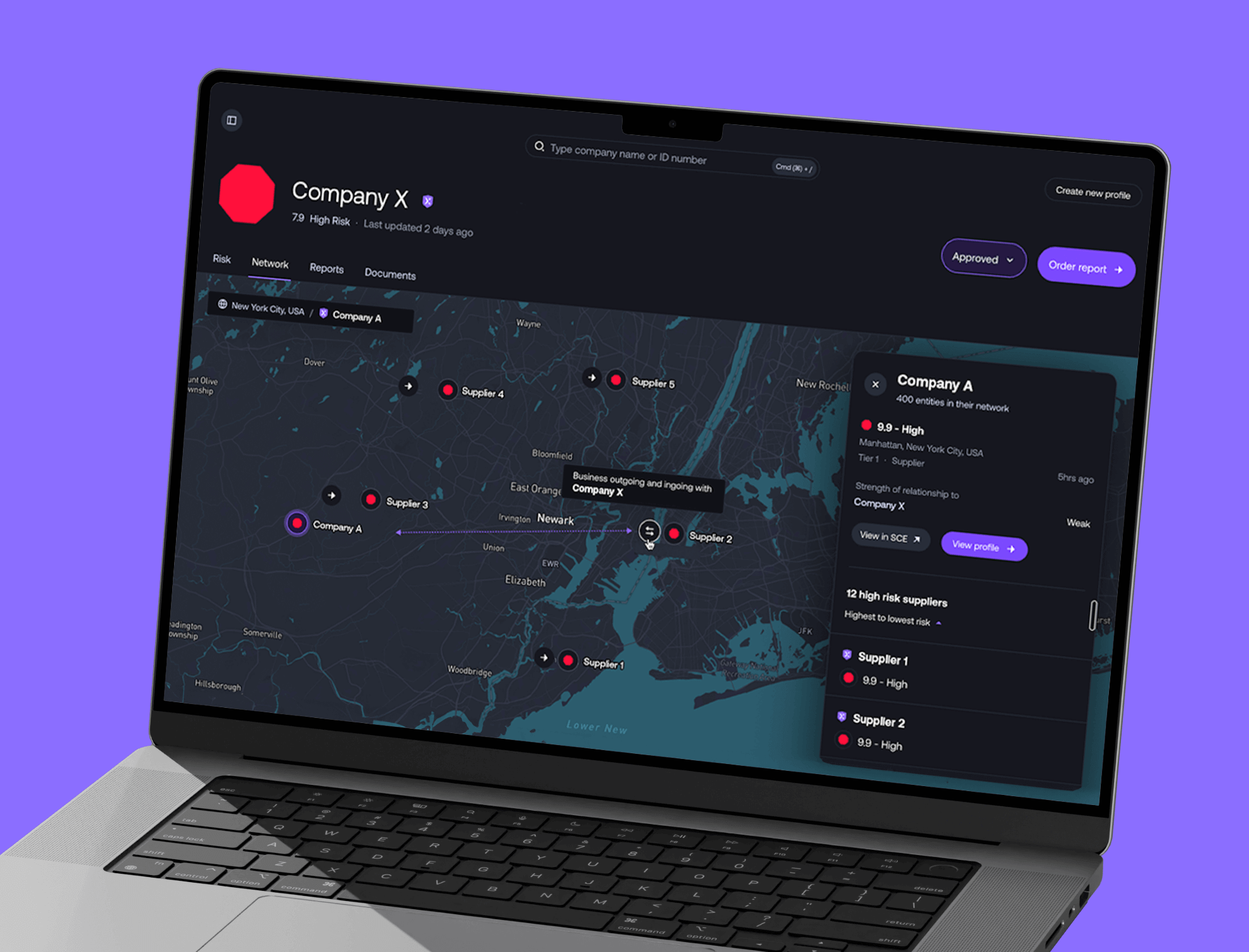
Exiger’s end-to-end third-party and supply chain due diligence solution provides stakeholders with a 360° view of the risks threatening your operations, brand and reputation through:
- Automated knowledge graph creation from structured and unstructured open-source data
- Comprehensive risk profiles, including dashboards and analytics
- Continuous monitoring of relationships for changes
our blog


