
What Is ESG Risk in Supply Chains?
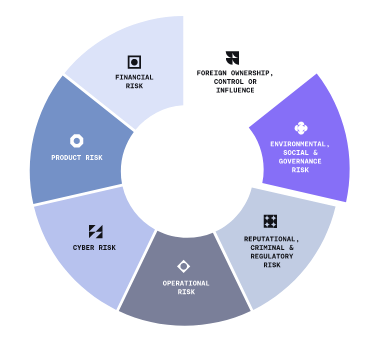
ESG risk is one of seven dimensions of risk in Exiger’s risk-scoring model for third-party relationship management (TPRM) and supply chain risk management (SCRM).
Risk exposure multiplies at each tier within your supply chain ecosystem through the unknown reliance on sub-tier suppliers who might be involved in forced labor, experience data breaches, or engage in poor environmental practices.
- Incorporate Human Rights and Environmental Due Diligence (HREDD) into your organization’s procurement, sourcing, and compliance team’s due diligence process.
- Follow up with ongoing media monitoring to provide a current and complete risk view, which will better inform your ESG risk appetite, tolerance and decision-making to align with strategy and minimize financial costs, reputational damage as well as foster sustainable growth and build trust with stakeholders.
Exiger’s solutions addresses global third party and supply chain legislation and regulations, including:
- EU Deforestation Regulation (EUDR)
- Corporate Sustainability Due Diligence Directive (CSDDD)
- German Supply Chain Due Diligence Act (SCDDA)
- US Uyghur Forced Labor Protection Act (US UFLPA)
- UK Modern Slavery Act 2015
- France Duty of Vigilance Act
- Swiss Ordinance Act
- Norwegian Transparency Act
- EU Duty of Vigilance Legislation
- Australian Modern Slavery Act 2018 (Commonwealth Act)
- The California Transparency in Supply Chains Act 2010
- Canadian Forced and Child Labour in Supply Chains Act 2024 (due diligence reporting requirements starting in May 2024)
- And EU’s emerging regulations in Forced Labor
- EU Carbon Border Adjustment Mechanism (CBAM)
Additionally, when assessing these risks, the entity is searched against many databases, global research and news, regulatory or government websites such as OSHA and EPA, all focused on HREDD data and risk. Exiger’s limitless data collection focuses on emerging sustainability topics like forever chemicals, greenwashing, climate change, bio diversity loss, deforestation and water scarcity or long-existing focus areas like conflict minerals and chemical spills.
- Environmental concerns
- Greenhouse gas/carbon emission impact
- Pollution and waste
- Hazardous materials management
- Recycling and circularity
- Animal rights and trafficking
- Maintaining biodiversity
- Deforestation
- Water conservation and management
- Air quality
- Energy management
- Human rights
- Modern slavery
- Human trafficking
- Forced & child labor
- Conflict minerals
- Social discrimination
- Worker rights
- Fair wages
- Product and workplace safety
- Diversity, equity and inclusion
- Supporting charities and social enterprises
- Promoting employment
- Data privacy
- Leadership
- C-level changes
- Board of directors
- Management team members
- Compliance with laws and regulations
- Fraud, corruption and sanctions
- Money laundering
- Tax evasion
- Business in high-risk locations
- Layoffs
- Liquidity problems
- Supply chain oversight
- Data breach
- Misleading communication (greenwashing)
our blog


