
Supply Chain Risk Alert: The U.S. Department Of Commerce’s deadline June 12, 2026 onshoring application deadline has now passed — and for organizations whose suppliers did not secure confirmed agreements, the 100% default tariff rate is no longer a future risk but a near-certain outcome beginning July 31, 2026, 38 days away.
Three of the 17 companies named in the April 2 executive order — Pfizer, Johnson & Johnson, and GlaxoSmithKline — remain without confirmed Commerce onshoring agreements as of this publication, leaving clients that source from those manufacturers facing potential 100% tariff impact in weeks. For companies that source patented drugs or active pharmaceutical ingredients (APIs) from outside the United States, the tariff landscape has undergone a long-term shift.
On April 2, 2026, President Trump signed a proclamation imposing tariffs of up to one hundred percent on patented pharmaceutical imports, the most sweeping executive intervention in drug supply chain policy in decades. The order creates immediate exposure for any organization whose suppliers, contract manufacturers, or third-party distributors rely on foreign production of branded medicines. For all other companies outside Annex III, the operative deadline is September 29, 2026. The order was issued under Section 232 of the Trade Expansion Act of 1962, citing a Commerce Department finding that approximately 53% of patented pharmaceuticals distributed domestically are produced abroad.
Rather than a flat levy, the tariffs function as a compliance mechanism: companies that commit to both Most Favored Nation (MFN) drug pricing with HHS and domestic manufacturing with the Department of Commerce face a zero percent rate through January 20, 2029. Those that commit only to reshoring face a twenty percent rate, escalating to one hundred percent by April 2030. Generic pharmaceuticals and biosimilars are exempt for now, with a mandatory reassessment within twelve months.
Of the seventeen companies named in Annex III, including Eli Lilly, Novo Nordisk, and AbbVie, fourteen have executed full Commerce onshoring agreements and secured the zero percent rate; the three remaining — GlaxoSmithKline, Johnson & Johnson, and Pfizer — have reported HHS pricing deals but their Commerce onshoring agreements are not yet confirmed, leaving their July 31 tariff exposure unresolved. The Secretary of Commerce serves as lead administrator, coordinating implementation with HHS. For a full breakdown of each company’s agreement status, see the Appendix, p. 7.
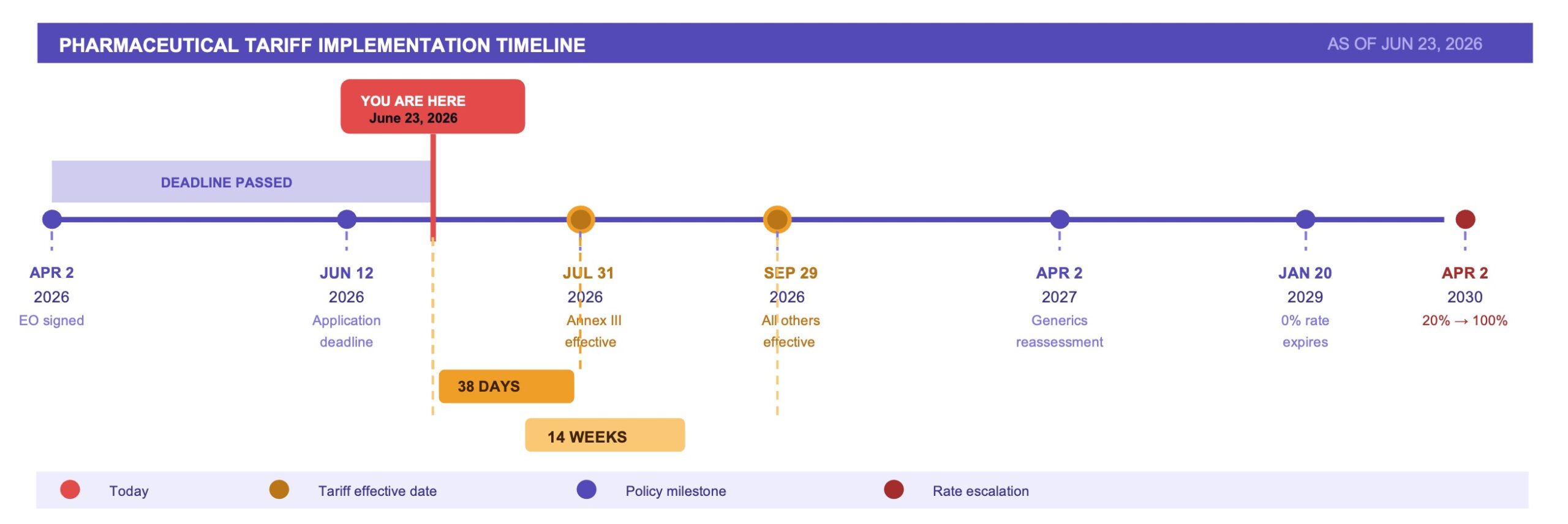
Tariff Structure
The rate structure is deliberately progressive and escalating — designed to increase pressure on manufacturers to onshore production on the administration’s timeline. Tariff exposure for any given supplier is not fixed at signing; it shifts based on whether that company has struck a pricing deal with HHS, secured a Commerce-approved onshoring plan, or taken no action at all. For procurement and supply chain teams, this means a supplier that is tariff-exempt today may not be tomorrow, and the cost of that change will not necessarily be absorbed by the manufacturer. It will move through the supply chain. The table below maps the full rate structure as it stands today, but organizations should treat it as a living document: rates are designed to escalate, exemptions carry expiration dates, and the generics carve-out is explicitly temporary.
Company / Product Category | Tariff Rate | Conditions |
Default, all patented drugs and APIs in Annex I | 100% | Effective July 31, 2026 (17 companies in Annex III) or September 29, 2026 (all others) |
Companies with Commerce-approved U.S. onshoring plans | 20% | Rises to 100% on April 2, 2030 (four years from the order date) |
Products of EU, Japan, South Korea, Switzerland & Liechtenstein | 15% | Per existing trade framework agreements; unless a lower rate applies |
Products of the United Kingdom | 10% → 0% | 0% through Jan. 19, 2029 per U.S.-U.K. pharmaceutical pricing arrangement (Dec. 1, 2025), conditional on major UK pharma companies entering required MFN agreements; otherwise 10% applies. |
Onshoring plan + MFN pricing agreement with HHS | 0% | Through January 20, 2029; 14 companies listed in Annex II (Includes Regeneron, whose Commerce onshoring agreement was confirmed by the White House on April 23, 2026, after the order’s signing). |
Orphan drugs, cell & gene therapies, nuclear medicines, plasma-derived therapies, fertility treatments, ADCs, medical countermeasures | 0% | Conditional on trade/security framework or urgent U.S. health need |
Generic pharmaceuticals, biosimilars, and associated ingredients | 0% (for now) | Exempt for now, with a mandatory reassessment within twelve months |
U.S.-origin pharmaceutical products | 0% | Not subject to Section 232 tariffs |
The twelve-month reassessment clock runs from April 2, 2026, meaning Commerce must complete its review by approximately April 2, 2027. The criteria for that reassessment have not been formally published, but the executive order’s national security framing and the administration’s stated goal of onshoring pharmaceutical manufacturing suggest the review will examine domestic production capacity for generic APIs, concentration of generic supply in China and India, and whether the exemption is undermining the order’s reshoring objectives. Organizations with significant generics exposure should not treat the current exemption as permanent. Practically, this means: identify which generics in your formulary or supply chain rely on Chinese or Indian API manufacturing, assess whether those products would face material cost or availability risk if the exemption is lifted, and begin building contingency sourcing options now — before the April 2027 review forces the issue.
Exiger Insights
Despite recent volatility, a significant volume of branded pharmaceutical shipments remain exposed to 100% tariffs effective September 29, 2026, and the time to execute onshoring plans, secure exemptions, or absorb the cost impact is running out. Exiger’s analysis of patented pharmaceutical and branded API shipment records reveals U.S. supply chain exposure beyond the 17 companies identified in Annex III of the proclamation. While those companies dominate the headlines, Exiger’s data confirms a volume of branded pharmaceutical shipments from manufacturers not captured in Annex III that remain fully exposed. Shipment activity for this segment reflects the characteristically low-volume, high-value cadence of branded originator medicine trade. That cadence shifted meaningfully in mid-2025: as Section 232 tariff deadlines crystallized and threats of rates as high as 200% intensified, companies across the supply chain front-loaded shipments of branded drugs and APIs to build inventory buffers ahead of anticipated cost shocks, driving a pronounced spike in July and August 2025 before normalizing once the U.S.-EU trade framework agreement reduced near-term tariff escalation risk.
The sharpness of the September 2025 decline — steeper than the ramp-up that preceded it — is consistent with demand compression once pull-forward orders were exhausted, as buyers abruptly stopped ordering after accumulating sufficient buffer inventory. The secondary dip in January 2026 reflects a distinct but related dynamic: post-stockpile drawdown, as U.S. buyers worked through accumulated inventory before resuming normal procurement. Buyers who relied on that buffer are now re-entering the market on a normal procurement cycle, directly into the tariff environment the pull-forward was designed to avoid.
(Source: Exiger) NUMBER OF SHIPMENTS SINCE BEGINNING OF 2025 FROM PATENTED PHARMACEUTICAL AND BRANDED API SHIPMENTS, EXCLUDING ANNEX III COMPANIES
(Source: Exiger) TOP SHIPPERS BY NUMBER OF SHIPMENTS SENT FROM PATENTED PHARMACEUTICAL AND BRANDED API MANUFACTURERS
These shippers span the full range of Annex I product categories, and are concentrated in markets with deep, difficult-to-relocate manufacturing infrastructure.
The top shippers to the U.S. include specialty injectable and IV drug producers, hormone and GLP-1 manufacturers, plasma-derived biologic suppliers, and contract development and manufacturing organizations, covering the full breadth of originator pharmaceutical and API categories under Annex I.
Their manufacturing base is heavily concentrated in a handful of key geographies: Germany, Switzerland, Ireland, and Belgium rank among the top source countries by shipment count, reflecting the entrenched manufacturing infrastructure embedded in these European markets, and the structural challenge of onshoring or redirecting supply on a compressed timeline.
Tariff exposure extends well beyond finished drug products, reaching deep into the branded API and key starting material supply chains that underpin them.
Shipment classification spans a range of HS codes listed under Annex I. Finished medicaments (HS Code 3004) dominate by volume. But the exposure runs deeper:
- HS Code 2937 — hormones and GLP-1 receptor agonists
- HS Codes 2933 — heterocyclic compounds and branded small molecule APIs
- HS Codes 2918 & 2922 — carboxylic acids and amino acid derivatives
- HS Codes 3002 & 3003 — biological preparations and unmixed medicaments
The breadth of classifications confirms that no single layer of the pharmaceutical supply chain is insulated. Companies focused solely on finished product exposure risk missing significant upstream vulnerability in their API and starting material sourcing.
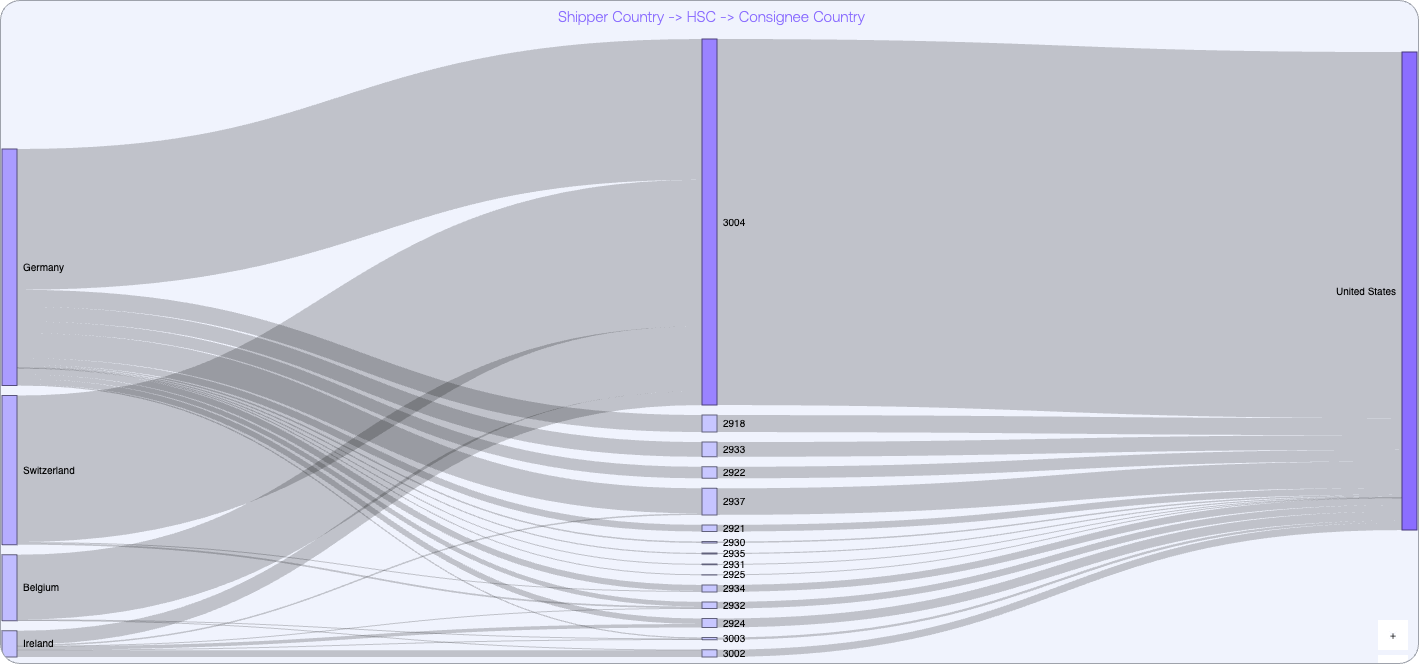
(Source: Exiger) U.S.-BOUND PATENTED PHARMACEUTICAL AND BRANDED API TRADE FLOWS BY SHIPPER COUNTRY AND HS CODE
Note: Shipment data reflects all U.S.-bound patented pharmaceutical and branded API trade flows by HS code classification. While the majority of shipments represent branded drug products, some HS codes, particularly Chapter 29 API classifications, may include generic API volumes, as HS codes do not distinguish between branded and generic formulations.
(Source: Exiger) DISTRIBUTION OF U.S.-BOUND PATENTED PHARMACEUTICAL SHIPMENTS BY HS CODE CLASSIFICATION
Industry Impact
The immediate commercial consequence of this order is a bifurcation of the global pharmaceutical market: companies that have already secured pricing and onshoring agreements lock in tariff-free access to the U.S. market, while non-compliant manufacturers face abrupt cost doubling at the U.S. border beginning this summer.
Industry Response
The pharmaceutical industry’s reaction has split along the same lines as the tariff structure itself. The 14 large companies that secured both MFN pricing and onshoring agreements1, including Eli Lilly, Novo Nordisk, AbbVie, Merck, and Novartis, have publicly aligned with the administration’s onshoring agenda, in many cases announcing multi-billion-dollar U.S. manufacturing commitments to secure their exemptions through January 20, 2029. Notably, Johnson & Johnson, Pfizer, and GlaxoSmithKline have secured HHS pricing deals but have not yet secured Commerce onshoring agreements, and the 0% tariff pathway requires both, leaving them partially exposed despite appearing on the broader list. However, the broader industry has pushed back. PhRMA President and CEO Stephen Ubl warned that “Tariffs on cutting-edge medicines will increase costs and could jeopardize billions in U.S. investments announced in the last year,” arguing that every dollar spent on tariffs is a dollar that cannot go toward domestic capital investment. PhRMA has further argued that when innovative drugs or their inputs are sourced abroad, tariffs raise costs without directing new capital toward domestic manufacturing, and that those foreign sources overwhelmingly come from allied nations in the EU and Japan rather than adversarial ones — undermining the national security rationale the administration has used to justify the tariffs. This concern is grounded in FDA data showing that as of 2025, only 11% of API manufacturers are U.S.-based, meaning nearly 90% of API manufacturing facilities supplying the U.S. market are located overseas, leaving domestic production costs broadly exposed to import levies even for medicines assembled in the United States. Smaller and mid-size pharmaceutical companies, which face the same 100% rate but lack the negotiating leverage to secure exemptions, bear the most acute exposure if they cannot reach agreements before the September 29, 2026, enforcement window.
Drug Pricing and Patient Access
Patient advocates have already raised concerns that 100% tariffs on branded drugs will raise costs for payers, insurers, hospital formularies, and patients. This exposure is not limited to imported finished drugs. Domestically manufactured patented drugs that rely on foreign-origin APIs classified under Annex I face tariff liability at the ingredient level, meaning production cost increases flow through to payers and patients regardless of where final assembly occurs. A Health Affairs Scholar study modeled this dynamic and found that a 100% API tariff would add an average of $21.15 per prescription for domestically produced drugs using imported APIs — a cost that manufacturers on narrow margins are unlikely to absorb fully. U.S. prescription drug spending rose 12.7% in 2025 to $915 billion and is projected to surpass $1 trillion for the first time in 2026, with branded drugs accounting for approximately 90% of total spending despite only 15% of prescriptions. For specialty drugs and biologics with limited domestic manufacturing alternatives, price increases or supply constraints are a near-term risk. Government purchasers, including the Department of Veterans Affairs, Department of Defense, and federal health programs, face outsized cost exposure: the federal government is the single largest purchaser of prescription drugs in the United States.
Manufacturing and Onshoring Acceleration
The order is explicitly designed to accelerate domestic pharmaceutical manufacturing. Companies that commit to Commerce-approved onshoring plans can access the 20% intermediate rate, a significant incentive to production. Several major manufacturers had already announced large-scale U.S. capital commitments before or concurrent with this order. Johnson & Johnson pledged $55 billion in U.S. investment over four years (a commitment that stands even as its Commerce onshoring agreement remains pending); Roche announced $50 billion over five years; Novartis committed $23 billion over five years; AstraZeneca announced $50 billion in U.S. manufacturing and R&D through 2030; and Eli Lilly has been expanding its LEAP manufacturing campus in Lebanon, Indiana. On May 6, 2026, Lilly announced $4.5 billion for the same campus, bringing its total LEAP campus investment to over $13 billion. Novo Nordisk announced a $4.1 billion expansion of its Clayton, North Carolina fill-finish facility. However, the transition timeline for building pharmaceutical-grade manufacturing capacity in the U.S. typically runs five to ten years, meaning near-term supply disruption risk is real even for companies that initiate onshoring plans.
Federal Procurement Exposure
Organizations with existing multi-year federal pharmaceutical contracts should assess whether current pricing assumptions remain viable under the new tariff regime. The federal government is the single largest purchaser of prescription drugs in the United States, through the VA, DoD, and federal health programs, and fixed-price contracts executed before April 2, 2026 may not contain economic price adjustment clauses adequate to absorb a 100% tariff on non-exempt manufacturers. Agencies and prime contractors sourcing from Pfizer, Johnson & Johnson, or GlaxoSmithKline face particular near-term uncertainty, as those manufacturers’ tariff status remains unresolved ahead of the July 31 effective date. Contract officers should review supply agreements for price adjustment provisions, substitution rights, and force majeure language before the enforcement window opens.
What Organizations Should Do Now
With implementation beginning as early as July 31, 2026, the window to act is narrow:
- Map your supply chain to the country, supplier, and manufacturing site level. Tariff liability flows from where ingredients are sourced and where products are actually made, not just where a product is labeled as manufactured. A drug assembled in Ireland from Chinese-origin APIs may carry exposure at multiple tiers. Mapping must cover direct suppliers, critical sub-tiers, and specific manufacturing site locations, a supplier headquartered in a low-tariff country may still manufacture in a high-tariff one, and site changes can trigger re-validation requirements that consume critical lead time. Exiger’s supply chain intelligence platform can accelerate this process by surfacing corporate ownership structures, country-of-origin data, manufacturing site registrations, and sub-tier supplier relationships that are not visible through standard procurement records.
- Vet suppliers against regulatory, sanctions, and compliance databases before onboarding alternatives. As organizations move to qualify new suppliers in response to tariff exposure, vetting speed creates pressure to cut corners. Exiger’s continuous regulatory, sanctions, and compliance monitoring identifies operational and safety risks, including GMP violations, debarment actions, and sanctions exposure, before a new supplier enters your supply chain, not after.
- Audit contracts for price adjustment and substitution rights. Federal agencies and prime contractors should review pharmaceutical supply contracts for economic price adjustment provisions, supply substitution rights, and force majeure language. Cost increases above contractual thresholds could give suppliers grounds to renegotiate or exit. Begin scenario planning for formulary substitutions now.
- Monitor the regulatory event landscape for escalations and exemption updates. This order will generate a significant volume of downstream regulatory activity, exemption petitions, Commerce onshoring agreement announcements, HHS pricing deal updates, and potential legal challenges. Exiger’s supply chain disruption event intelligence continuously tracks developments across the regulatory landscape so organizations are not relying on news alerts to stay current on changes that affect their supplier base.
- Begin contingency sourcing, assess generics as alternatives, and engage legal counsel on exemptions. With roughly six weeks to the July 31, 2026 Annex III effective date and fourteen weeks to the September 29 deadline for all others, the window is narrow but not closed. Commerce’s June 12 onshoring application deadline has now passed — organizations whose suppliers missed it should assume the 100% default rate and plan accordingly. Focus qualification efforts on therapeutic categories with few substitutes and long regulatory lead times. Where therapeutic equivalence exists, evaluate generic alternatives now, recognizing that formulary approvals and contract terms may slow the transition. Selective stockpiling is advisable for highest-risk categories with China or India API dependence, but should be coordinated to avoid accelerating the shortages it aims to prevent. Legal counsel should assess remaining exemption pathways — particularly for orphan drugs, cell and gene therapies, and other categories eligible for conditional zero-rate carve-outs independent of the onshoring agreement track.
Appendix: Annex III Companies — As of June 22, 2026
The 17 companies listed in Annex III of the executive order are subject to the July 31, 2026 tariff effective date. Of these, 13 had executed onshoring agreements with the Secretary of Commerce prior to the order’s signing (Annex II). The remaining four — Pfizer, Johnson & Johnson, GlaxoSmithKline/ViiV Healthcare, and Regeneron — had publicly announced MFN drug pricing arrangements with HHS but had not finalized Commerce onshoring agreements as of the proclamation’s signing, a distinction that matters: the 0% tariff pathway under heading 9903.04.65 requires both an HHS pricing agreement and a Commerce onshoring agreement. Regeneron has since resolved its status through a deal announced by the White House on April 23, 2026, bringing the total number of confirmed agreements to 14. Commerce published formal procedures for the remaining three companies to apply for onshoring agreements, with a June 12, 2026 deadline. That deadline has now passed; as of this publication, Commerce has not announced any additional agreements, and Pfizer, Johnson & Johnson, and GlaxoSmithKline/ViiV Healthcare remain without finalized onshoring agreements, leaving their tariff exposure unresolved ahead of the July 31 effective date.
Company | Annex II Date | Tariff Effective | Tariff Rate | Status |
AbbVie Inc. | July 31, 2026 | 0% | ✓ Commerce agreement executed | |
Amgen Inc. | July 31, 2026 | 0% | ✓ Commerce agreement executed | |
AstraZeneca Pharmaceuticals, LP | July 31, 2026 | 0% | ✓ Commerce agreement executed | |
Boehringer Ingelheim Pharm., Inc. | July 31, 2026 | 0% | ✓ Commerce agreement executed | |
Bristol Myers Squibb | July 31, 2026 | 0% | ✓ Commerce agreement executed | |
Eli Lilly and Company | July 31, 2026 | 0% | ✓ Commerce agreement executed | |
EMD Serono, Inc. | July 31, 2026 | 0% | ✓ Commerce agreement executed | |
Genentech, Inc. | July 31, 2026 | 0% | ✓ Commerce agreement executed | |
Gilead Sciences, Inc. | July 31, 2026 | 0% | ✓ Commerce agreement executed | |
GlaxoSmithKline LLC / ViiV Healthcare | July 31, 2026 | 100% | ⚠ HHS pricing deal reported; Commerce onshoring agreement not yet confirmed | |
Johnson & Johnson | July 31, 2026 | 100% | ⚠ HHS pricing deal reported; Commerce onshoring agreement not yet confirmed | |
Merck Sharp & Dohme LLC | July 31, 2026 | 0% | ✓ Commerce agreement executed | |
Novartis Pharmaceuticals Corp. | July 31, 2026 | 0% | ✓ Commerce agreement executed | |
Novo Nordisk Inc. | July 31, 2026 | 0% | ✓ Commerce agreement executed | |
Pfizer Inc. | July 31, 2026 | 100% | ⚠ HHS pricing deal reported; Commerce onshoring agreement not yet confirmed | |
Regeneron Pharmaceuticals, Inc. | July 31, 2026 | 0% | ✓ Commerce agreement confirmed April 23, 2026 | |
Sanofi S.A. | July 31, 2026 | 0% | ✓ Commerce agreement executed |
How Exiger Can Help
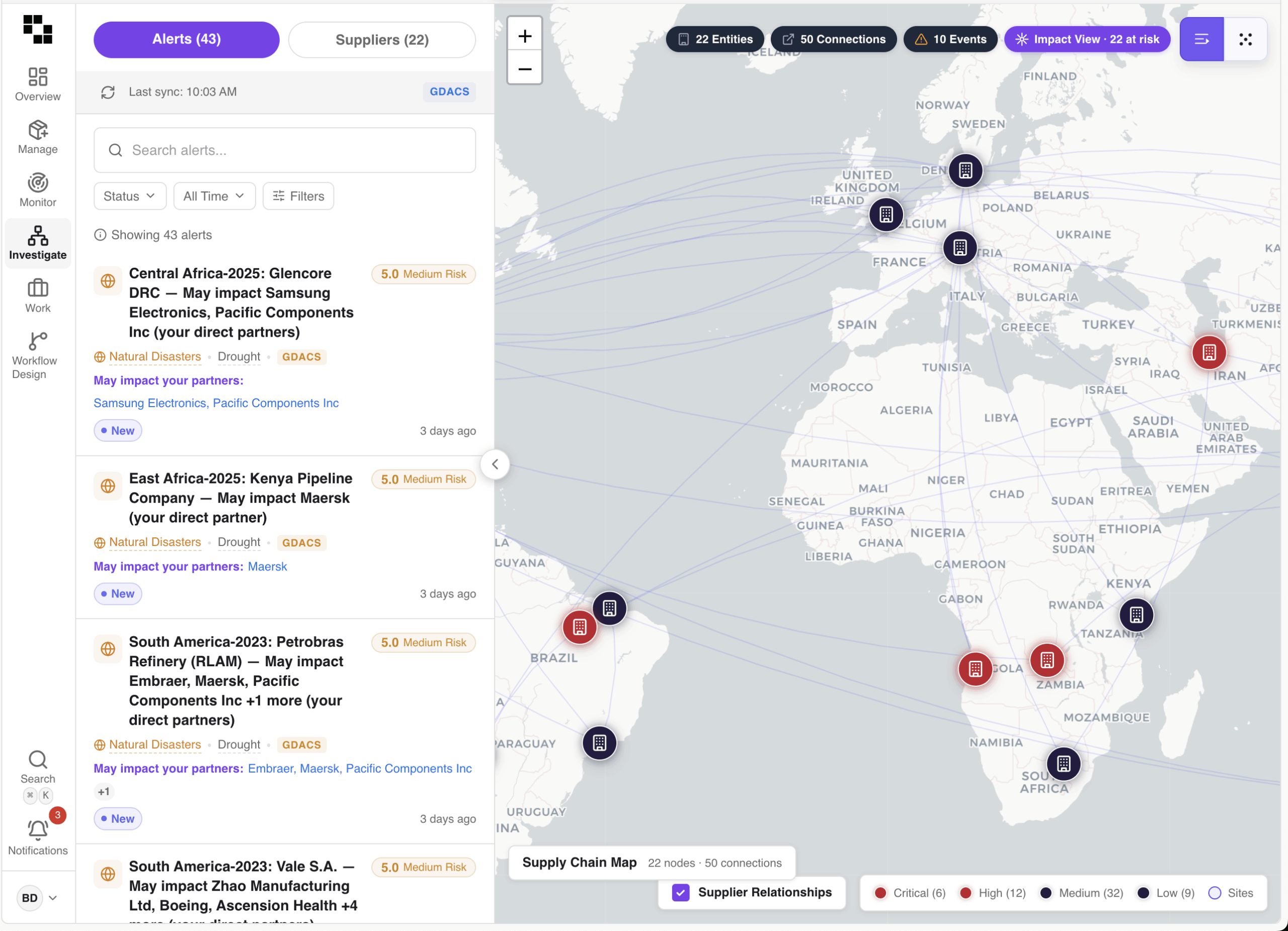
Supply Chain Exposure Mapping
Uses our AI and ontology to connect relationships across suppliers, sites, materials, and upstream dependencies; helping teams understand if and how their networks are exposed.
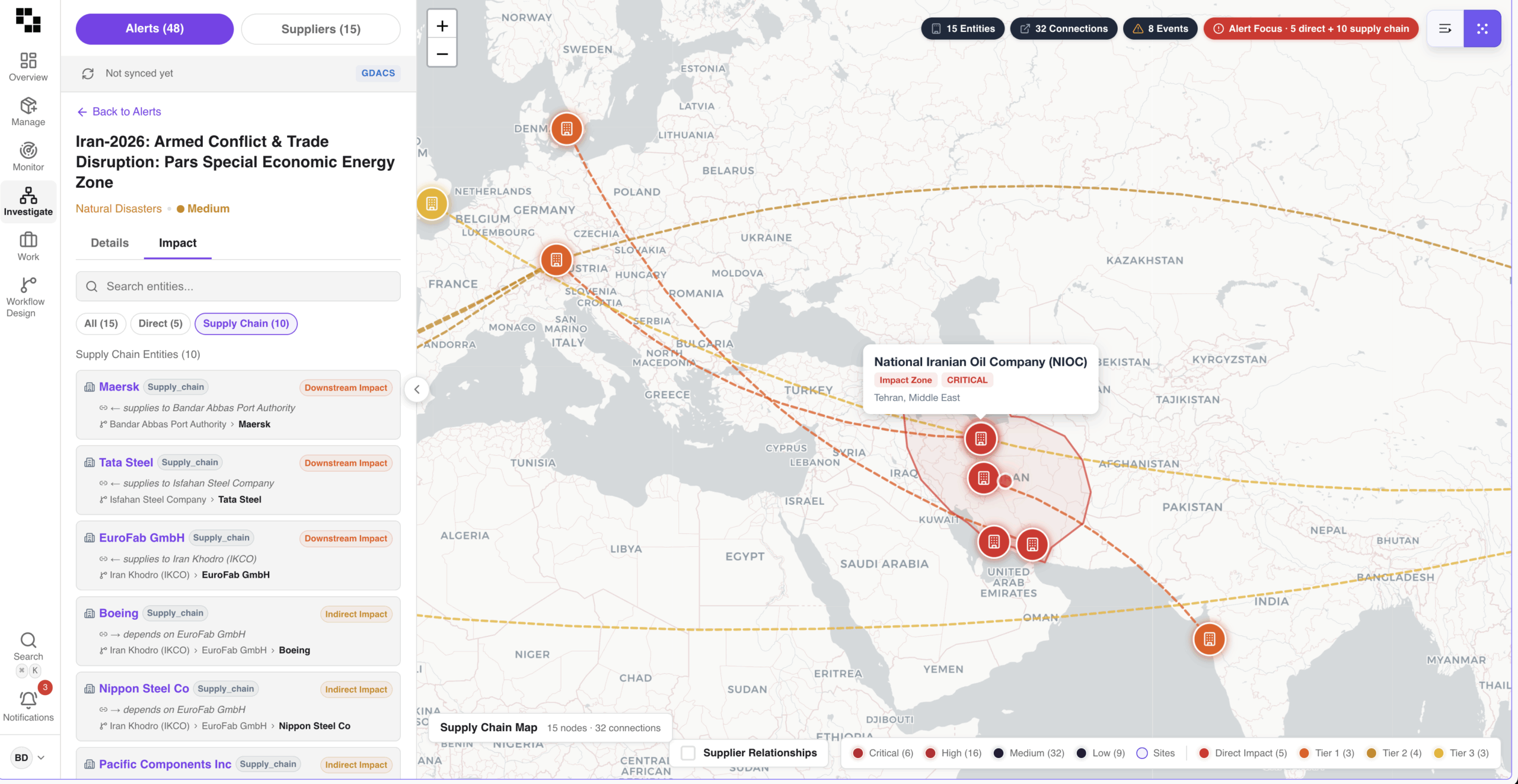
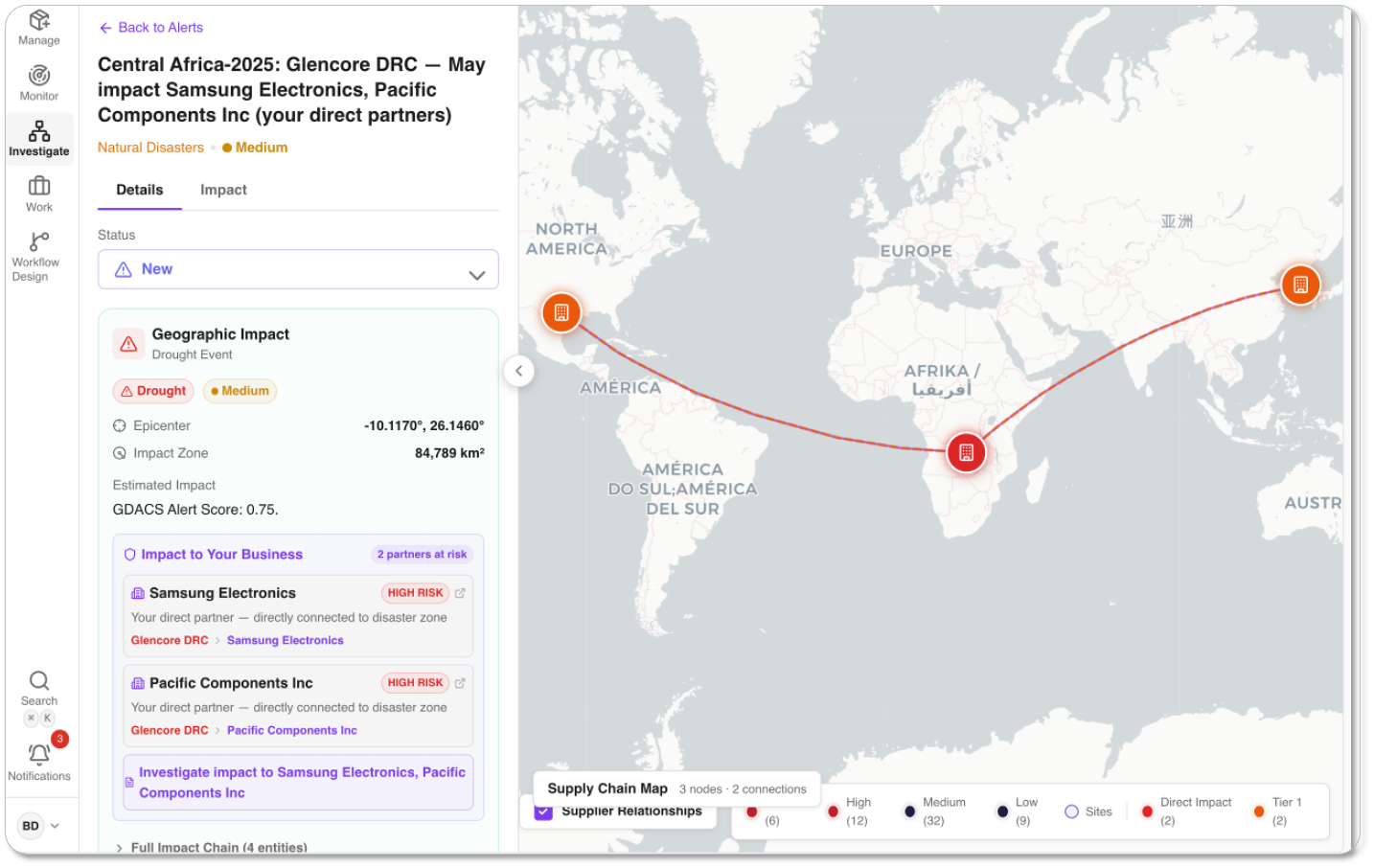
Screenshot: a detailed view of your global network and how disruption events may impact trade flow. (Source: 1Exiger.AI)
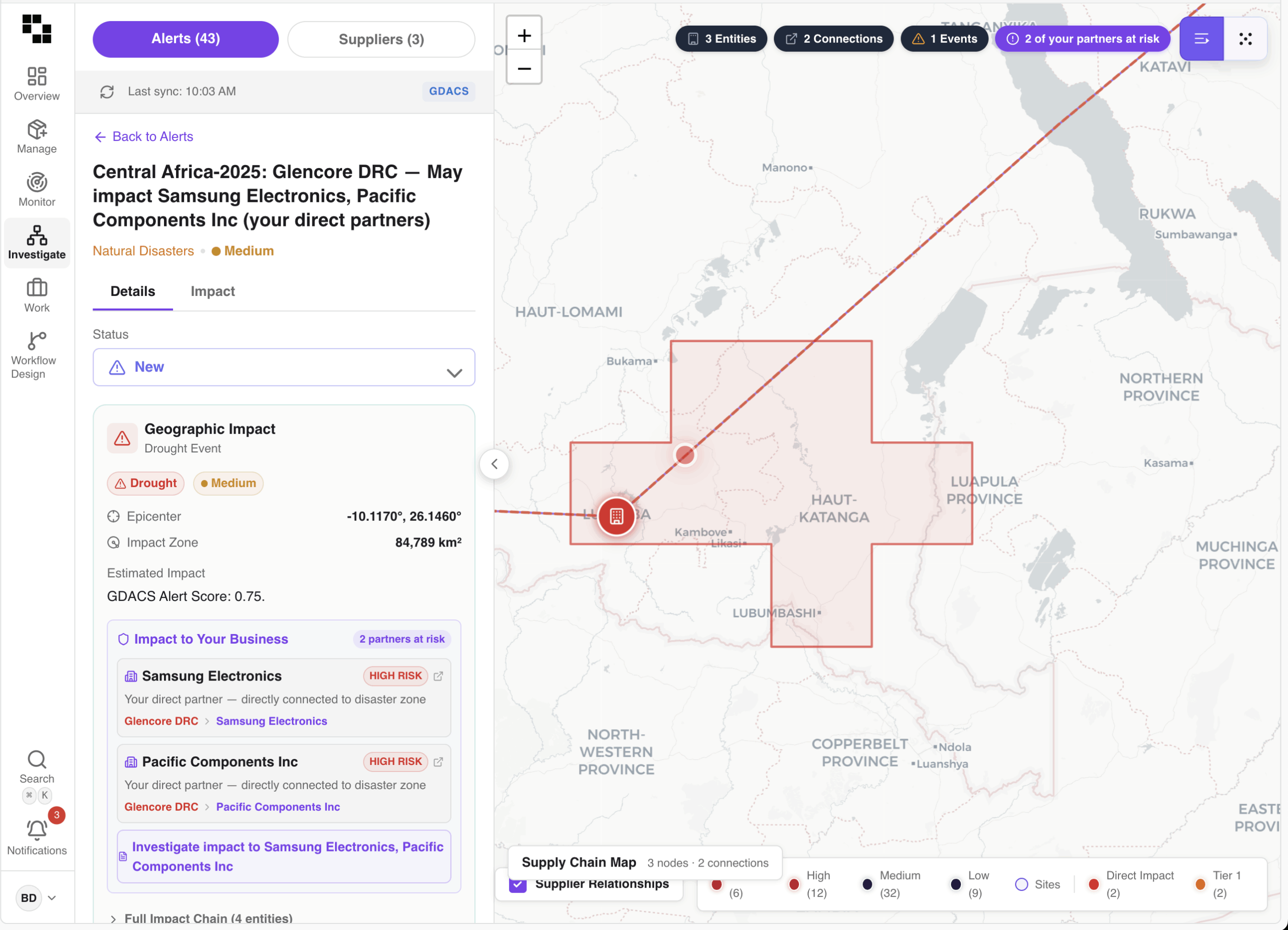
Dependency and Concentration Analysis
Identifies single points of failure across suppliers, sites, ports, and routes, and ranks where concentration creates outsized operational risk.
Screenshot: 1Exiger.AI identifies critical chokepoints, even in the sub-tiers, that may be impacted by disruption events. (Source: 1Exiger.AI)
Alternative Sourcing Analysis
Identifies and onboards substitute sources considering manufacturing capability, geographic fit, and more.
Screenshot: see projected downstream impact from disruption events at every tier. (Source: 1Exiger.AI)
Scenario Modeling and Sensitivity Testing
Models disruption scenarios to quantify downstream impact, stress-test resilience, and compare mitigation strategies across suppliers, parts, and materials.
Screenshot: model impact for various conditions and receive recommended courses of action.
(Source: 1Exiger.AI)
Unified Risk Governance and Response Workflows
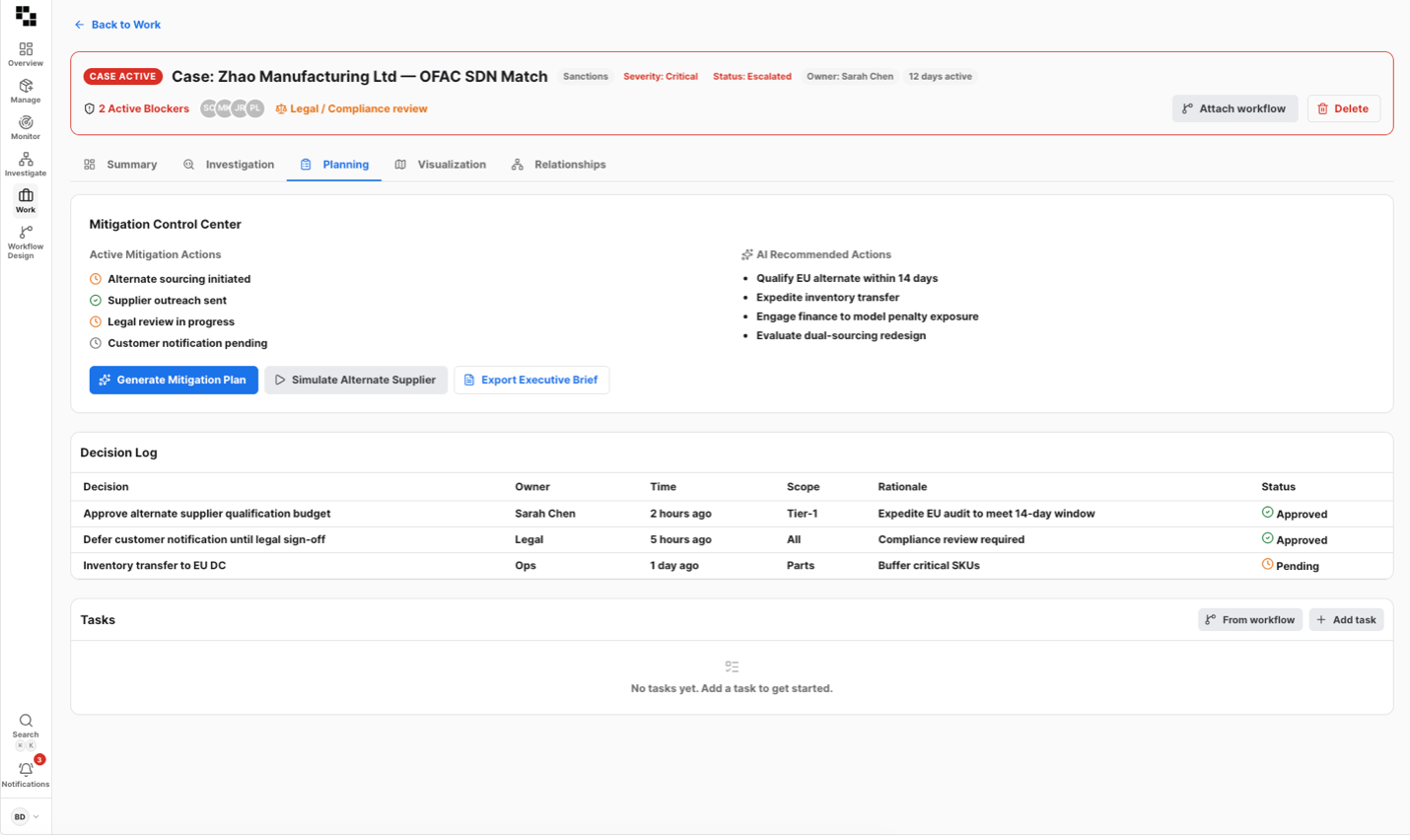
Creates a shared “war room” view with ownership, escalation, and tracked mitigation actions across procurement, logistics, compliance, and leadership.
Screenshot: custom workflows and agentic AI connect cross functional teams and execute remediations to prevent disruption. (Source: 1Exiger.AI)
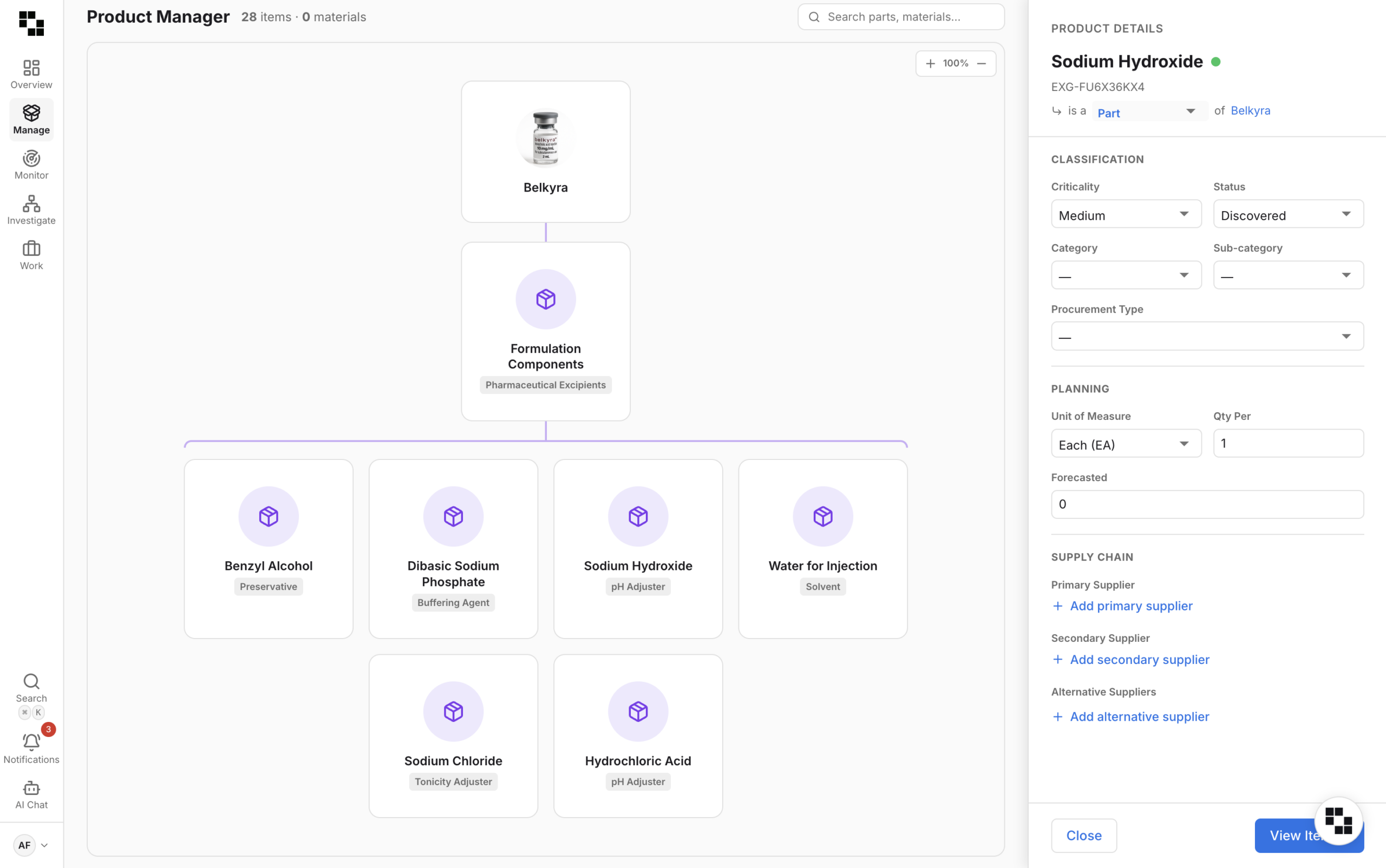
Screenshot: 1Exiger.AI maps products to their underlying ingredients and suppliers revealing tariff exposure, concentration risk, and hidden dependencies (Source: 1Exiger.AI)
Get an Exposure Assessment
Contact us or reach out to your Customer Success Manager to get started.
Table of Contents
Get in Touch
Learn how you can build a more resilient supply chain.


